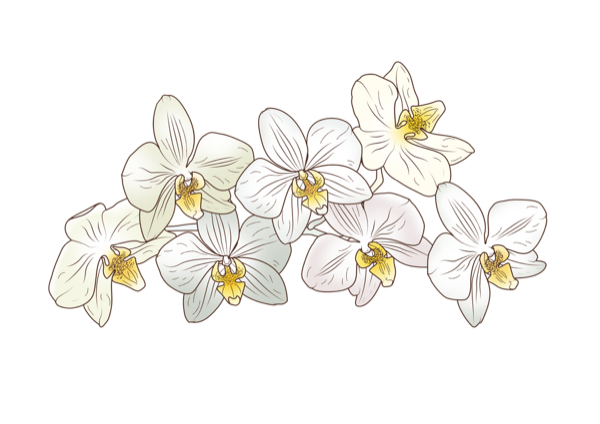
The orchid is a beautiful flowering houseplant and one of the most popular plants there is. No wonder, because let's be honest, those colourful flowers are fantastic, aren't they? To enjoy your beautiful orchid for as long as possible, it is important to care for it properly.
How do you care for an orchid? Our orchid grower Sabine Olsthoorn knows everything about orchid care and shares all her care tips on this page.


About the orchid
The orchid is the best-known flowering houseplant in the Netherlands. You can find it in many different colours, which are increasingly seen in living rooms. Did you know the orchid travelled all the way around the world before it arrived here in the Netherlands?
The orchid originally comes from Australia and Southeast Asia. There, orchids grow on trees, because orchids may be different from what you are used to with plants.
They are epiphytes. This means that, unlike many other houseplants, they do not grow in the ground but on trees. So they have no soil roots but aerial roots. With these, orchids take their nutrients from the air, light, water and also from the trees. Beautiful and special.
Types of orchids
There really are an enormous number of orchids. The most popular is the Phalaenopsis, but the Cambria, Cattleya, Cymbidium, Dendrobium, Miltonia and Oncidium are also well-known and popular orchids. They also have Dutch names, namely:
- Moth orchid (Phalaenopsis)
- Pansy orchid (Miltonia)
- Tiger orchid (Oncidium)
- Cattleya orchid (Christmas orchid)
- Boat orchid (Cymbidium)
- Bamboo orchid (Dendrobium)
- Cambria orchid (Cambria)
The care for these types does not differ much. If you follow the care tips on this page, you will do very well with moth orchid care, Dendrobium care or the care of other orchids.
TIP | Want to know more about the different types? Read all about them in our blog: The top 7 most beautiful orchid types


Watering orchids
You can water your orchid in different ways. How much and how often you need to water an orchid also depends on various factors.
Water once a week as standard, using lukewarm water
Fully submerge the nursery pot
Check the roots before watering
Preferably use lime-free water (e.g. rainwater)
As a rule, you should water your orchid once a week. Depending on the temperature and the season, it can also be watered less or more often. In the warm summer months your orchid will be thirstier and need more water. In the cold winter months you can safely water your orchid once every two weeks.
TIP |Before you water your orchids, always check the roots in the plastic nursery pot. They tell you whether the plant is thirsty or still has enough water.
- Are the roots light grey? Then water, because they are dry.
- Are the roots dark green? Then they have enough water. You don't need to water.


How do you water an orchid?
- Unlike many other houseplants, an orchid is best watered in one way: by submerging the nursery pot
The best way to water an orchid is to submerge the plant in water. The easiest way to do this is to submerge the nursery pot in a bucket of water.
It is better not to water with ice cubes, because this is too cold for the plant. Orchids don't like the cold. It is best to water at room temperature.
Want to know more? Check out our blog.
Leave the orchid's plastic nursery pot in water for 5 minutes. Then lift the orchid in its nursery pot out of the decorative pot and let the water drain off well. Now you can put your orchid back in the decorative pot and it can enjoy fresh water again.
TIP |Tap water is fine, but rainwater is even better! Tap water contains lime. If you can collect rainwater at home, go ahead and give rainwater to your orchid! This way you can enjoy your orchid for even longer.
Important: do you water your orchid with a watering can after all? Then make sure a layer of water never remains standing in the pot! This can cause root rot, which is harmful to the plant.

Watch video on YouTube

Placement
Avoid full sun
Avoid cold
Avoid draughts
Not next to a fruit bowl
Not next to a blazing radiator
Where is the best place for my orchid?
Orchids like a bright spot with room temperatures between 17 and 22 degrees.
TIP |Never place your orchid next to a fruit bowl. Many types of fruit give off a natural substance called ethylene. This substance can speed up the ageing process of the orchid.
Can an orchid be in the sun?
An orchid can be in the sun for a short while, but be careful! Too much direct sunlight is harmful to the leaves and flowers. Too much direct sunlight can burn the leaves, and this will not recover.
TIP |Direct sunlight is unfiltered. If you would still like to place your orchid in a south-facing window or another spot with a lot of direct sunlight, this is possible if you hang a sheer curtain in front of it.
TIP | Read all of Sabine’s grower tips here for the best spot for orchids.


Can an orchid stand above the radiator?
No, don't place your orchid above or next to the radiator when it is on. The warm radiator air makes the air drier, and orchids don't like that. In the colder winter months the air in the house often gets drier. To make your orchid feel more at home, you can do two things.
- Mist your orchid with a plant sprayer. This increases the humidity. Only spray the leaves. You can also spray the buds, but take care not to hit the flowers, as they like that less.
- Place a bowl of water on the radiator.This makes the water evaporate and raises the humidity in your home. This option has a nice extra: almost all plants appreciate it!
Repotting an orchid
Only repot when it outgrows its pot
Special potting mix
Likes to sit snugly in the pot
Repot in spring


When should I repot my orchid?
As an orchid lover, you may have had the same orchid at home for two years or longer. Has it outgrown its pot after all this time? Then it is high time to repot your orchid into a larger nursery pot. The roots have grown so much that it is time for a new, larger nursery pot. You can do this by following the steps below.
Keep in mind that orchids are epiphytes. This means that in nature they attach to living greenery and take nutrients from water and air. This means orchids don't like ordinary potting soil, but prefer orchid bark, which consists of tree bark.
TIP |We have written an extensive blog about repotting orchids and how best to do it. Read the blog: Repotting orchids.
How do I repot my orchid?
Repotting your orchid may work a little differently from what you are used to with other houseplants, but with these tips from grower Sabine, you are ready to go and give your orchid its new home!
STEP 1 | Take the orchid, roots and all, out of the plastic nursery pot.
STEP 2 | If necessary, cut away the black roots with pruning shears. These are rotten and the orchid doesn't need them.
STEP 3 | Take a bucket of lukewarm water and submerge the orchid. Then put the orchid back in the plastic nursery pot.
STEP 4 | Sprinkle the new, fresh orchid bark into the pot and press down gently.
STEP 5 | Put the orchid back in a somewhat cooler spot in your home where the temperature is around 18 degrees, and avoid direct sunlight. This way the orchid can grow new, strong roots.

Watch video on YouTube

Do orchids need special plant food?
The best way to care for an orchid is to treat it once every two months to orchid food. This keeps your orchid beautiful for even longer, because it receives extra nutrients.
Special orchid food
Feed once every two months
Do you really want to pamper your orchids?Give them the care they deserve with our complete orchid pampering kit. This carefully assembled kit contains everything you need to keep your orchids healthy, strong and radiant.

Are orchids poisonous?
There are an enormous number of different types of orchids, but the best-known and most popular orchids in the Netherlands are not poisonous. The Phalaenopsis is not poisonous to dogs and cats. If you, someone else, children or pets do experience symptoms after touching or ingesting the leaves or flowers of an orchid, always consult your doctor. Want to know more? Read all about it in our blog are orchids poisonous?
Flowering period
The orchid owes its popularity to its beautiful flowers. They come in an enormous number of different colours and colour combinations, so there is always an orchid that suits your interior.
Beautiful flowers
Usually blooms once a year
Flowering period of 6 – 10 weeks
Only the Phalaenopsis blooms longer and more often


How many times a year does an orchid bloom?
Most orchids have 1 flowering period per year, lasting about 6 to 10 weeks. The Phalaenopsis orchid is an exception to this. The Phalaenopsis has up to 3 flowering periods per year and can even bloom for 2 to 6 months! It is no coincidence that the Phalaenopsis orchid is the most popular orchid in the Netherlands.
How do you get an orchid to bloom again?
Has your orchid finished flowering? Don't panic! This certainly doesn't mean your orchid is dead. It is simply having a nice rest, because it takes a lot of energy to keep those beautiful flowers looking so good. You can make your orchid bloom again by pruning the plant.
Pruning orchids
Your orchid is a flowering houseplant. This means the plant can come into bloom during certain periods of the year, and not during others. When your orchid's flowering period comes to an end, the flowers will fall one by one. This is a natural process. The stems will also change colour and turn yellow. Don't throw your orchid away if you want to enjoy it again and make it bloom again. It is then time to prune your orchid.
Cut at the second node
Prune once the flowers have fallen
Place the orchid somewhere cooler after pruning

How do you cut/prune an orchid?
The best way to prune an orchid is to cut off the stem with sharp pruning shears. Where do you cut a finished orchid?→ At the second node!
The second node of an orchid is the second thickening in the stem counting from the pot. When you prune an orchid because the flowers have fallen and the stem has changed colour, you can cut the stems back to the second node. Keep caring for your orchid by simply continuing to water it and keeping it out of the sun, and after a few months you will see your orchid start to grow new shoots with buds again.
TIP |After pruning at the second node, put your orchid in a cooler room, for example the bedroom. But note: still not too cold!
TIP | Become a pruning expert and read Sabine’s best grower tips for pruning orchids.

How do you propagate an orchid?
You can propagate an orchid by division or sowing, but it is very difficult as a hobbyist. Our grower Sabine has years of experience propagating orchids. In our nursery in Naaldwijk we propagate the orchids ourselves. If you want young, healthy orchids, you are best off to buy orchids in our shop. Still want to propagate one yourself? Then you can try it as follows:
- Remove a dormant node from an orchid. This is a node from which no branch has grown yet. Do this carefully and sterilely by peeling off the top layer of the node.
- Once you have done this, the node looks like a little bud. You can propagate this bud and it can become the new orchid.
TIP | Want to know more? Grower Sabine tells you everything about propagating orchids in our blog.
How do you save an orchid?
Is your orchid letting you know she disagrees with something? Is the foliage discolouring, is she drooping, losing leaves or flowers, or dropping buds? She is trying to tell you something.
Orchids don't get sick easily, but they can suffer from mealybugs, for example. Mealybugs are annoying little pests. They look like small, fluffy insects. It is important to take action as soon as possible if you see mealybugs on your orchid, because they suck nutrients out of the plant that your orchid badly needs to stay healthy. In addition, mealybugs spread extremely fast, so you want to prevent other plants in your home from becoming infested too.


Why is my orchid getting yellow leaves?
We hear this question regularly and it is easy to answer! Yellow leaves on your orchid can mean two things:
Temperature.If it is too cold, your orchid will let you know by getting yellow leaves. Sudden temperature differences are also a possible cause of yellow leaves.
Sunlight.Orchids love lots of light, but not direct sunlight. Too much direct sunlight can be the cause of yellow leaves.
Work out for yourself which of these two causes applies to your orchid and move your orchid to a different spot quickly! For more tips, see our blog.
My orchid is getting yellow buds?
An orchid gets yellow buds as a result of too much cold, too much water or a dark spot. The orchid doesn't like this and will therefore drop its buds. Move the orchid to a somewhat warmer spot and water the orchid only once a week. Also make sure you don't place the orchid next to the fruit bowl. The substance released by fruit, called ethylene, is harmful to the orchid's buds.


Orchid drops flowers
There can be various reasons why your orchid drops flowers. This can be a result of incorrect orchid care, but also of the end of the flowering period. It is therefore important to find out which applies to your orchid.
Too little light.
Too little water.
Do you care for your orchid following the tips on this page? Then you have nothing to worry about. Your orchid is dropping flowers because it is the end of the flowering period. You can start pruning your orchid.
Why won't my orchid's buds open?
There can be various reasons why your orchid's buds don't open. The flowers cost the orchid a lot of energy. The plant needs that energy. Make sure you follow all the care tips on this page:
Water once a week as standard, using lukewarm water
Give special plant food
Check the roots before watering
Temperature between 18 and 22 degrees


Why are my orchid's buds falling?
If your orchid drops buds, it is very likely that your orchid is too cold and/or has received too little light. Move your orchid to a warmer spot (out of direct sunlight) and fully submerge the plant in water once a week for 5 minutes.
How do you know if an orchid is dead?
If an orchid is dead, you can tell as follows:
- All the leaves have fallen
- All the leaves have turned yellow
- The stems are completely dry
- All the aerial roots are brown and dry
Orchid gets limp leaves
Limp leaves on an orchid are a sign of incorrect orchid care. In this case it is a water problem. It can be too much or too little water, but because you are more likely to give too much water than too little, in most cases it is due to too much water.
How to fix it?Remove severely limp leaves and don't water for a while.

White bugs on orchid
Yuck, do you have white spots or bugs on your orchid? An orchid with white bugs probably has mealybugs. Mealybugs are a pest that occurs more often on houseplants. They suck the sap from the leaves and with it the energy from your plant. Mealybugs also excrete honeydew, which in turn can attract ants. You would rather prevent this. You can fight mealybugs by dipping a cotton bud in methylated spirits and then dabbing it on the mealybugs.
Is your orchid dead and can the care tips on this page no longer save her? In our shop you will find new orchids with trendy decorative pots!