


Calathea care
Looking for a houseplant with unique leaf patterns and air-purifying properties? Then the Calathea is exactly what you’re looking for! This beautiful plant is a real eye-catcher in any interior. However, caring for a Calathea can be a bit more challenging than other plants. The Calathea reacts strongly to too much water and needs high humidity to flourish. Here we tell you everything you need to know about Calathea care, so you can fully enjoy this green plant in your home. Learn how to keep the special Calathea healthy and radiant with our extensive care tips!
How do you care for a Calathea? Grower Sabine knows all about it and shares all her care tips with you on this page.

DISCOVER CARE TIPS
TIP | Go directly to:

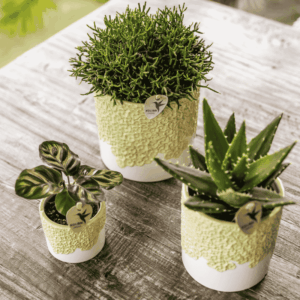


Watering a Calathea
The Calathea is a beautiful plant that needs regular watering to stay healthy, but it’s important not to overdo it. Here are some guidelines to ensure your Calathea gets just the right amount of water.
How often does a Calathea need water?
We recommend twice a week. But always check if
the soil is still moist. You do this by sticking your finger in the soil. Does the top layer of soil feel moist? Then it’s time for a little water. Not too much, otherwise you risk root rot.
How much water does a Calathea need?
Keep the soil slightly moist but not soggy. It’s important that the soil never dries out completely, but also doesn’t stay too wet, as this can cause root rot.
Location & temperature
Do you want your Calathea to flourish and maintain its beautiful leaf patterns? Then the right light and temperature conditions are also important. The Calathea, a tropical beauty, has specific requirements for its environment to stay healthy and radiant. Discover how to find the perfect balance to optimally care for this green plant in your home, so you can enjoy a healthy and vibrant plant.
Indirect light
Calatheas thrive best in bright, indirect light. Place the plant near a window where plenty of light enters, but make sure the sun’s rays don’t hit the leaves directly. Direct sunlight can burn the leaves and cause brown edges.
Ideal temperature
Calatheas thrive best at a constant temperature between 18°C and 24°C. This reflects their natural environment in tropical rainforests.
TIP | Keep your Calathea away from direct heat sources such as radiators, heaters, or fireplaces. Too much heat can dry out and burn the leaves.


Repotting a Calathea
The Calathea is not known for exceptionally fast growth, but regular repotting is still important for several reasons. Here are some considerations why you should repot your Calathea every 1-2 years, even if it might not grow particularly fast.
To start repotting a Calathea, it’s best to use a pot that is 20% larger than the original pot.
The best time to repot is during the growing season, usually in spring or early summer. This gives the plant the best chance to recover and adapt to the new pot.
Feeding a Calathea
It is certainly useful to give a Calathea food to keep the plant healthy and lush. Over time, potting soil becomes depleted of essential nutrients needed for the growth and health of your Calathea.
Feeding helps to replenish these nutrients. Regular fertilization can promote the growth of new leaves and helps the plant to be more resilient against diseases and pests. A well-fed Calathea will produce more vibrant and healthy leaves, contributing to the overall aesthetic value of the plant.
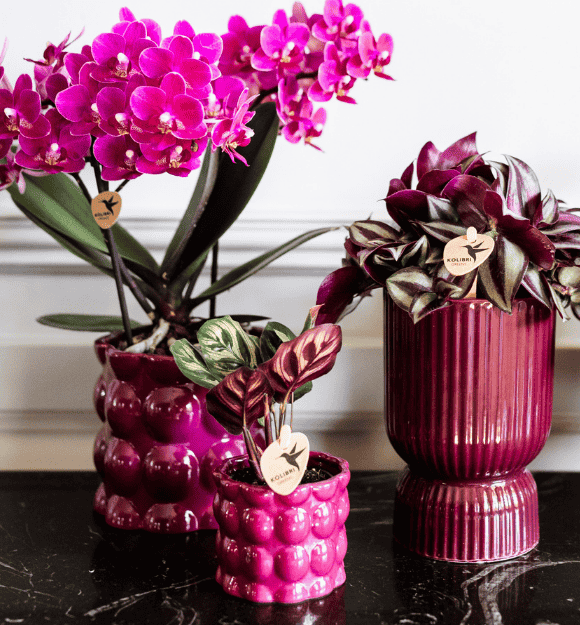

Common problems with Calathea
Like many other houseplants, Calatheas can sometimes need some extra care and attention. Below are the most common problems and how to fix and prevent them.
Brown edges
If the leaves get brown edges, there’s a good chance your Calathea is getting too little water or the humidity is too low. You can fix this by regularly spraying the plant with a plant mister.
Curling leaves
Curling leaves can indicate that your Calathea is too warm. Move the plant to a cooler spot or spray the leaves regularly. Sometimes curling leaves can also indicate an aphid infestation.
Yellow leaves
Yellow leaves are sometimes a sign that old leaves are dying off to make room for new ones. However, yellow spots can also mean your Calathea is getting too much water or light.
Limp, drooping leaves
If the leaves are hanging limp, your Calathea is probably thirsty. Give the plant some water and spray the leaves. If this doesn’t help, the plant might be in a spot that’s too dark.

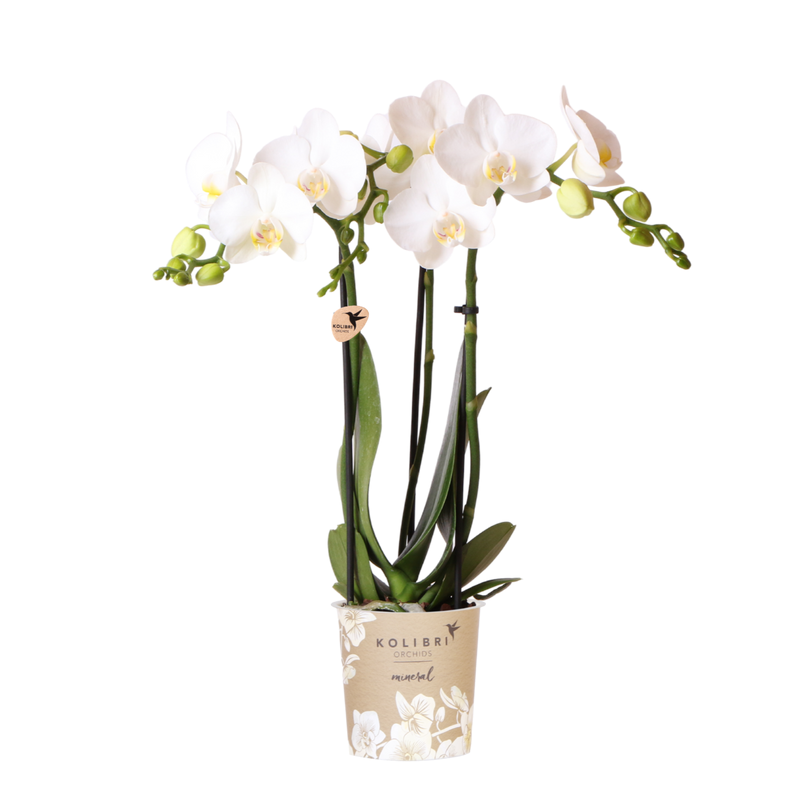

Needs plenty of light,
but no direct
sunlight
Submerge in water
once a week

Ideal
temperature 18
to 22 degrees
Only repot if
it grows out of
the pot



Give
special
orchid food
once every 2 months
Prune after the
flowering period

DISCOVER CARE TIPS
Video difference roots
How often should you water an orchid?
As a standard, you should water your orchid once a week. Depending on the temperature and the season, this can also be done less or more often. In the warm summer months, your orchid will be thirstier and need more water.
In the cold winter months, you can easily water your orchid once every two weeks.
TIP | Before you water the orchids, always check the roots in the plastic nursery pot. These tell you if they are thirsty or if they still have enough water.
Are the roots light gray? Then water them, because they are dry.
Are the roots dark green? Then they have enough water. You don’t need to water.
Video difference roots
How often should you water an orchid?
As a standard, you should water your orchid once a week. Depending on the temperature and the season, this can also be done less or more often. In the warm summer months, your orchid will be thirstier and need more water.
In the cold winter months, you can easily water your orchid once every two weeks.
TIP | Before you water the orchids, always check the roots in the plastic nursery pot. These tell you if they are thirsty or if they still have enough water.
Are the roots light gray? Then water them, because they are dry.
Are the roots dark green? Then they have enough water. You don’t need to water.
Video difference roots
How often should you water an orchid?
As a standard, you should water your orchid once a week. Depending on the temperature and the season, this can also be done less or more often. In the warm summer months, your orchid will be thirstier and need more water.
In the cold winter months, you can easily water your orchid once every two weeks.
TIP | Before you water the orchids, always check the roots in the plastic nursery pot. These tell you if they are thirsty or if they still have enough water.
Are the roots light gray? Then water them, because they are dry.
Are the roots dark green? Then they have enough water. You don’t need to water.
Video difference roots
How often should you water an orchid?
As a standard, you should water your orchid once a week. Depending on the temperature and the season, this can also be done less or more often. In the warm summer months, your orchid will be thirstier and need more water.
In the cold winter months, you can easily water your orchid once every two weeks.
TIP | Before you water the orchids, always check the roots in the plastic nursery pot. These tell you if they are thirsty or if they still have enough water.
Are the roots light gray? Then water them, because they are dry.
Are the roots dark green? Then they have enough water. You don’t need to water.
Video difference roots
How often should you water an orchid?
As a standard, you should water your orchid once a week. Depending on the temperature and the season, this can also be done less or more often. In the warm summer months, your orchid will be thirstier and need more water.
In the cold winter months, you can easily water your orchid once every two weeks.
TIP | Before you water the orchids, always check the roots in the plastic nursery pot. These tell you if they are thirsty or if they still have enough water.
Are the roots light gray? Then water them, because they are dry.
Are the roots dark green? Then they have enough water. You don’t need to water.
Video difference roots
How often should you water an orchid?
As a standard, you should water your orchid once a week. Depending on the temperature and the season, this can also be done less or more often. In the warm summer months, your orchid will be thirstier and need more water.
In the cold winter months, you can easily water your orchid once every two weeks.
TIP | Before you water the orchids, always check the roots in the plastic nursery pot. These tell you if they are thirsty or if they still have enough water.
Are the roots light gray? Then water them, because they are dry.
Are the roots dark green? Then they have enough water. You don’t need to water.
Video difference roots
How often should you water an orchid?
As a standard, you should water your orchid once a week. Depending on the temperature and the season, this can also be done less or more often. In the warm summer months, your orchid will be thirstier and need more water.
In the cold winter months, you can easily water your orchid once every two weeks.
TIP | Before you water the orchids, always check the roots in the plastic nursery pot. These tell you if they are thirsty or if they still have enough water.
Are the roots light gray? Then water them, because they are dry.
Are the roots dark green? Then they have enough water. You don’t need to water.
Video difference roots
How often should you water an orchid?
As a standard, you should water your orchid once a week. Depending on the temperature and the season, this can also be done less or more often. In the warm summer months, your orchid will be thirstier and need more water.
In the cold winter months, you can easily water your orchid once every two weeks.
TIP | Before you water the orchids, always check the roots in the plastic nursery pot. These tell you if they are thirsty or if they still have enough water.
Are the roots light gray? Then water them, because they are dry.
Are the roots dark green? Then they have enough water. You don’t need to water.
Video difference roots
How often should you water an orchid?
As a standard, you should water your orchid once a week. Depending on the temperature and the season, this can also be done less or more often. In the warm summer months, your orchid will be thirstier and need more water.
In the cold winter months, you can easily water your orchid once every two weeks.
TIP | Before you water the orchids, always check the roots in the plastic nursery pot. These tell you if they are thirsty or if they still have enough water.
Are the roots light gray? Then water them, because they are dry.
Are the roots dark green? Then they have enough water. You don’t need to water.

How should you water an orchid?
Unlike many other houseplants, it’s best to water the orchid in one way: submerging the nursery pot. The best way to water an orchid is by submerging the plant in water. You can do this most easily by submerging the nursery pot in a bucket of water.
It’s better not to water using ice cubes, as this is too
cold for the plant. Orchids don’t like the cold. It’s best to give
water at room temperature.
“The best way to water an orchid is by submerging the
plant in water.
You can do this most easily by submerging the nursery pot in a
bucket of water.”

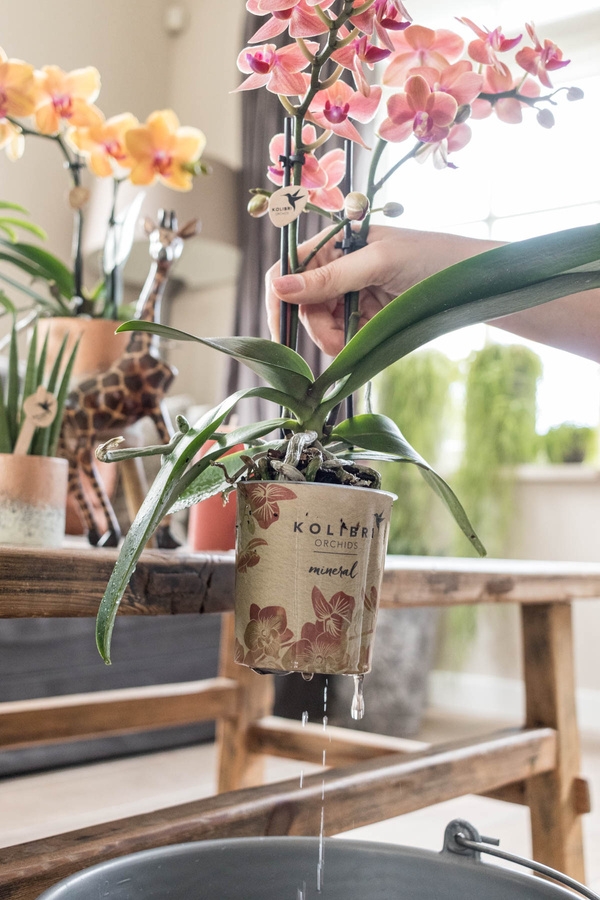

How long should you submerge an orchid?
Leave the orchid’s plastic nursery pot in water for 5 minutes. Then lift the orchid in the nursery pot out of the decorative pot and let the water drain well. Now you can put your orchid back in the decorative pot and it can enjoy fresh water again.
TIP | Tap water is fine, but rainwater is even better! Tap water contains lime. If you have the possibility to collect rainwater at home, feel free to do so and give rainwater to your orchid! This will allow you to enjoy your orchid even longer.
Important: if you do water your orchid with a watering can, make sure that a layer of water never remains in the pot! This can cause root rot, which is harmful to the plant.
Want to know even more? Read all of Sabine’s grower tips for watering orchids.