


Rhipsalis care
The Rhipsalis is a cheerful and fuzzy plant that is a must-have for your home. The Rhipsalis is not difficult to care for, making it an easy houseplant for everyone. You can recognize the Rhipsalis by its diverse appearance, which is mainly reflected in its stems. These range from thin to thick and from smooth to ribbed or hairy. The Rhipsalis is also often called the coral cactus. The plant belongs to the Cactaceae (cactus family) and is originally from Africa, several islands in the Indian Ocean, and South and Central America.
How do you care for a green plant? Grower Rob Olsthoorn knows everything about green plant care and shares all his care tips with you on this page.
How do you care for an orchid? Our orchid grower Sabine Olsthoorn knows everything about orchid care and shares all her care tips with you on this page.
DISCOVER CARE TIPS
TIP | Go directly to:

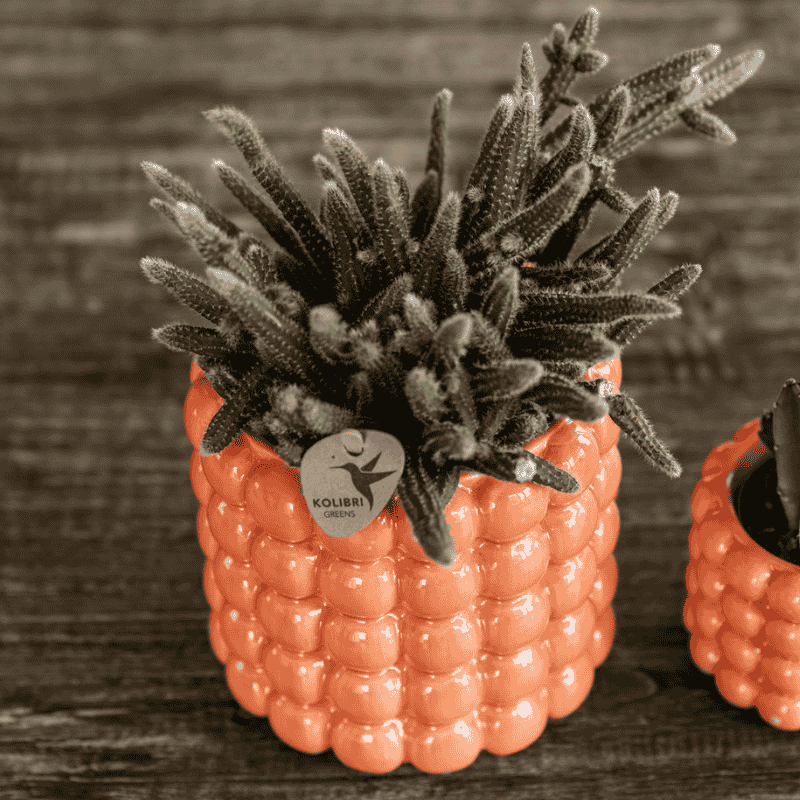

Watering Rhipsalis
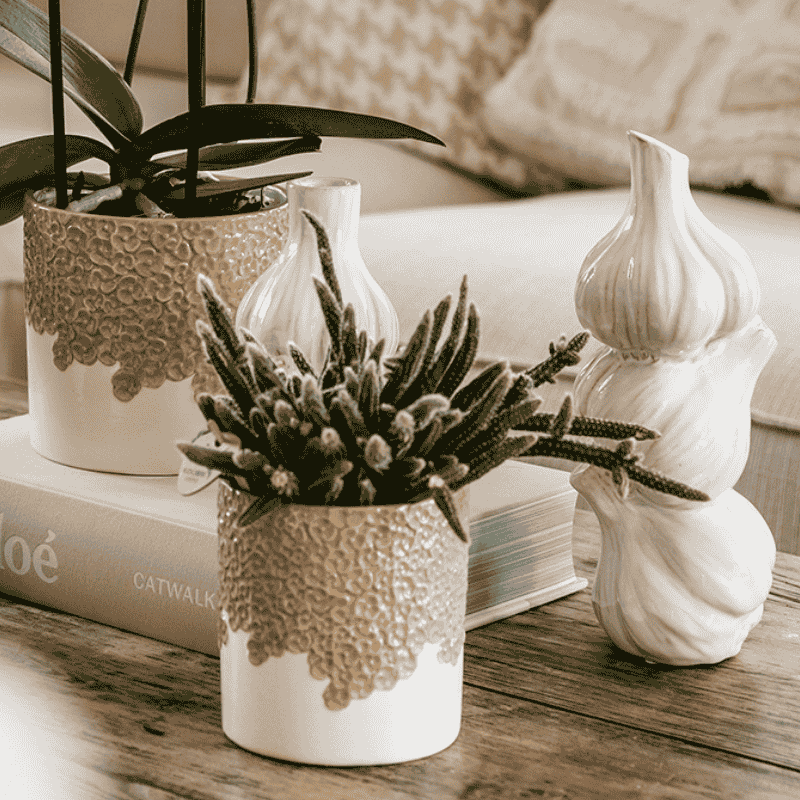
The Rhipsalis is an easy houseplant to care for. You might be wondering: how much water does a Rhipsalis need? The Rhipsalis descends from the succulent family, which means these houseplants don’t need much water. However, the Rhipsalis does require slightly more water than a typical succulent.
It’s best to water the Rhipsalis once every two weeks, preferably using a watering can. If you forget to water your Rhipsalis for a week, it’s no problem. It can easily go without for a week.
It’s generally not necessary to mist your Rhipsalis, but doing so can increase the product’s decorative value. This allows you to wash away any pests and dust from the houseplant. The best way to do this is by using a plant sprayer.
TIP | Give this houseplant small amounts of water each time. It’s wise to let the potting soil dry out first before watering the Rhipsalis again. If you give large amounts of water, the roots can rot and the Rhipsalis may shed its stems. That would be a shame, of course.
Location
Where can you place a Rhipsalis? And can a Rhipsalis stand outside? We’re going to answer all your questions about the best location for your Rhipsalis.
How fast does Rhipsalis grow?
It’s also possible to place the Rhipsalis in a dark spot; the houseplant will then need less water. On the other hand, the plant will grow more slowly than in a bright, semi-shaded location.

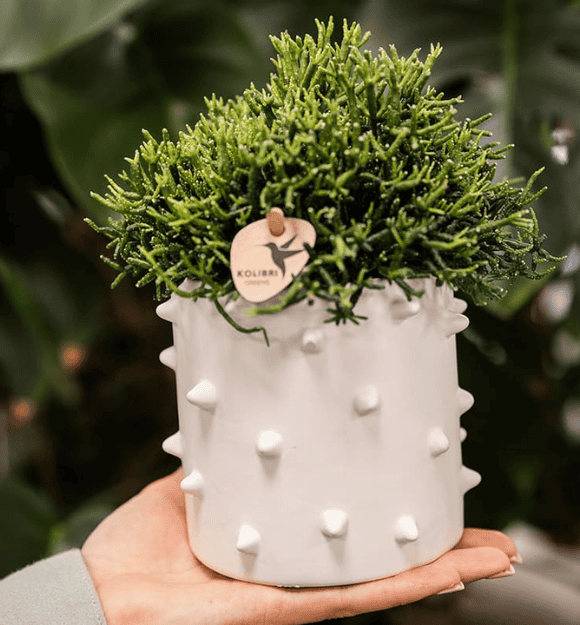
Light
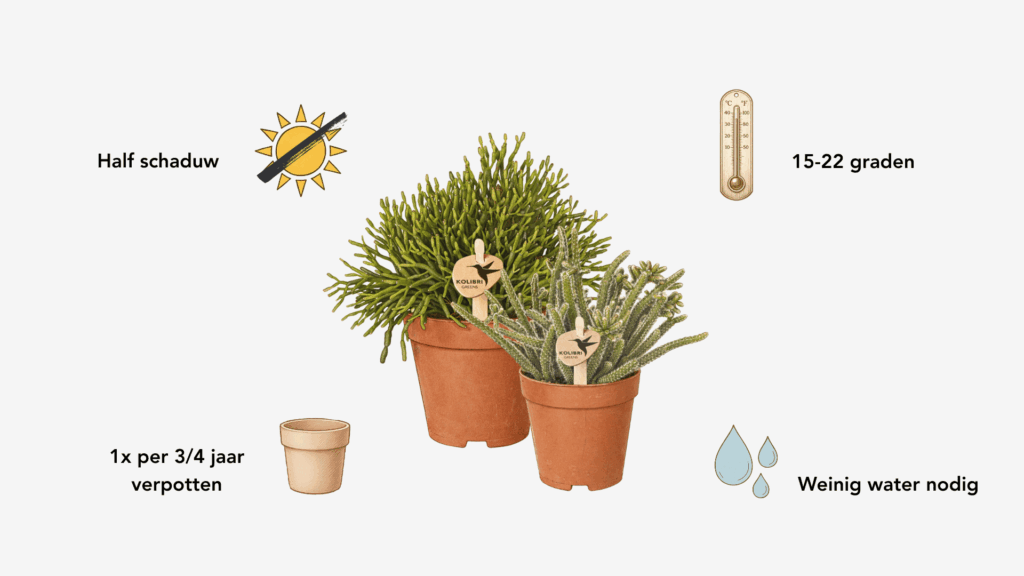
You can care for your Rhipsalis by placing it in a semi-shaded spot in your home. A semi-shaded spot is a place about 2 to 3 meters away from a window, or directly in front of a north-facing window. Rhipsalis originally grows in a tropical climate.
In the rainforest, there are many tall trees that block direct sunlight from the Rhipsalis, so the houseplant gets the best results when it’s not placed in direct sunlight either. You can easily tell if your Rhipsalis is in a spot that’s too bright, as the stems of the houseplant will start to discolor.
Temperature
The Rhipsalis doesn’t have very high temperature requirements. You’ll make them happy by placing the Rhipsalis in a room with temperatures between 15 and 22 degrees.
Additionally, you can also place it outside, but then it shouldn’t be colder than 10 degrees during the day and no colder than 5 degrees at night.
Repotting Rhipsalis
When should you repot a Rhipsalis?
Actually, it doesn’t need to happen that often. The Rhipsalis grows very slowly. We therefore advise repotting the Rhipsalis every 3 to 4 years. Use a plant pot that is at least 20% larger than the original pot at the time of repotting. If you want to repot your Rhipsalis, it’s best to do this in spring. You can use normal potting soil for this, which you can buy at a garden center near you. Using new, fresh potting soil will stimulate growth.
In addition, new potting soil always provides new nutrients for the houseplant and gives it fresh air around the roots. This prevents the roots from suffocating as quickly and gives the plant a new growth boost.
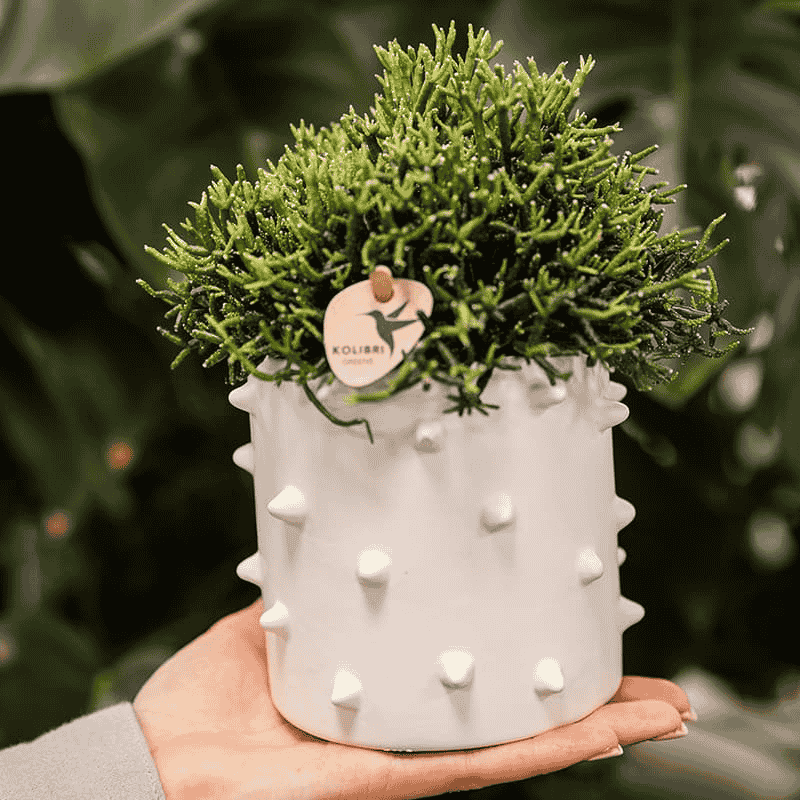
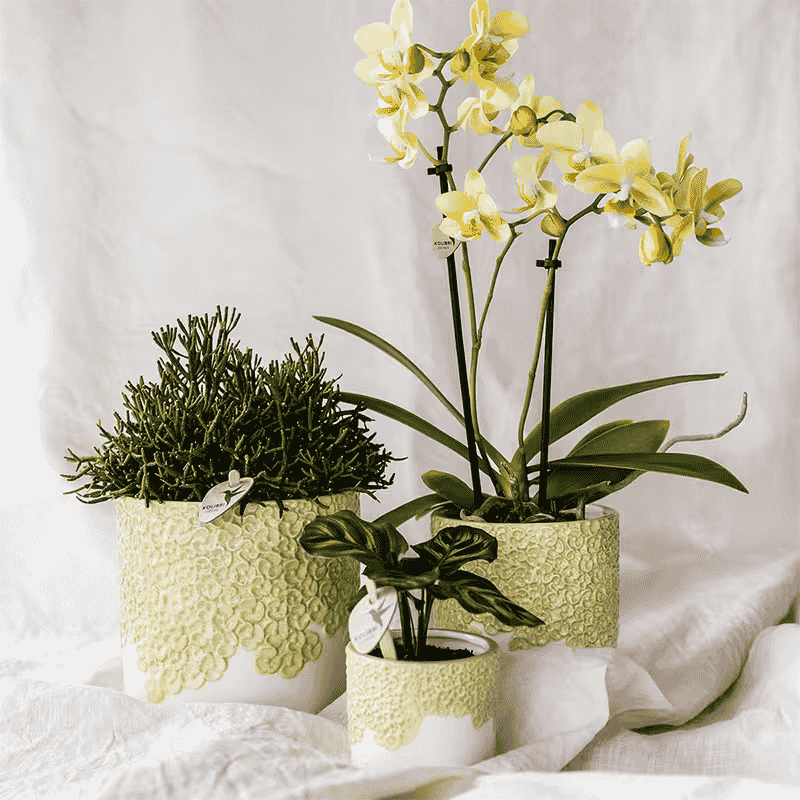
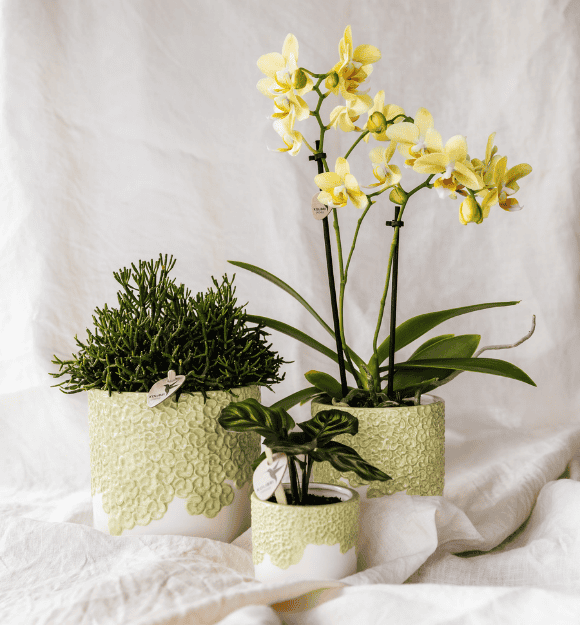
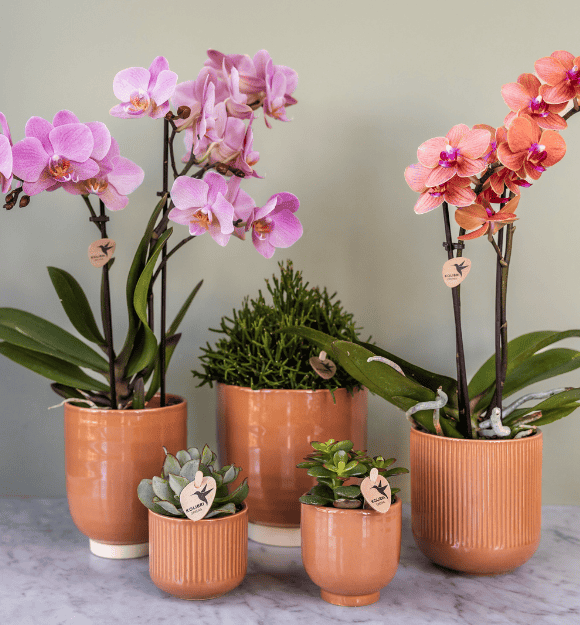
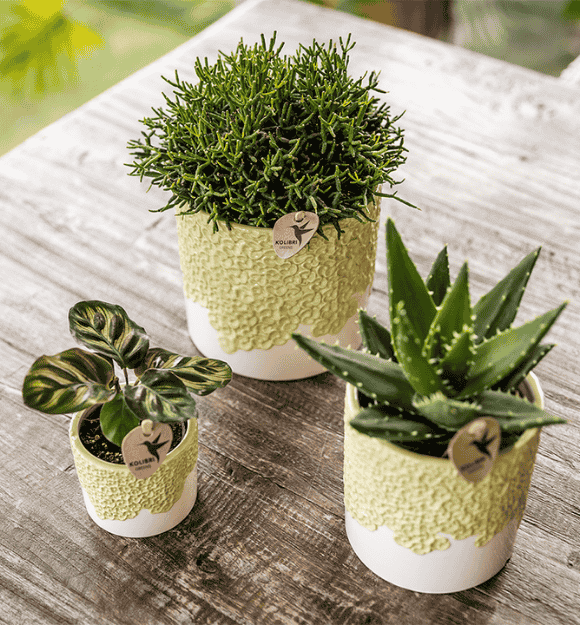
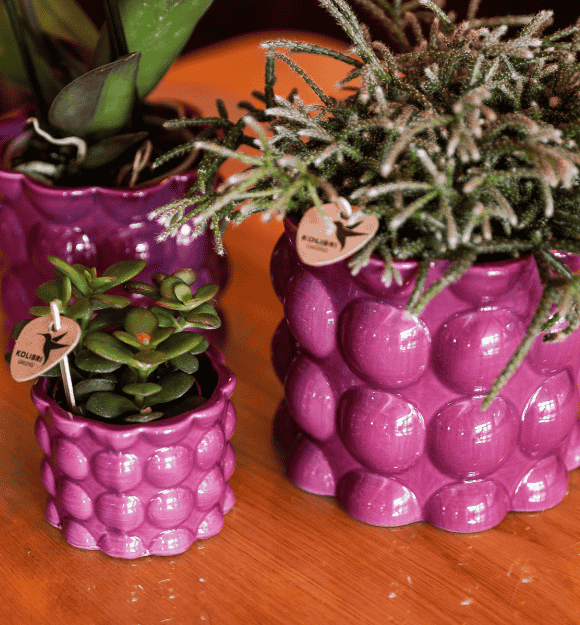
TIP | Repotting to a larger pot isn’t just better for the houseplant; it can also look much nicer. You can choose a new decorative pot for your Rhipsalis. Are you repotting your Rhipsalis into a decorative pot of 6, 9, or 12 centimeters? Who knows, you might find a decorative pot to your taste among our Kolibri Home decorative pots! Try placing the Rhipsalis in a tall pot so the plant’s stems can hang down. This causes the Rhipsalis stems to grow downwards, which creates a lovely effect.

Location

Avoid full sun
Avoid cold

Avoid drafts

Do not place next to a fruit bowl
Do not place next to a blasting heater
Feeding Rhipsalis
Rhipsalis plants don’t grow very fast and therefore need less nutrition than, for example, orchids. During the spring and summer period, you can give the Rhipsalis some extra nutrition; in the autumn and winter months, this isn’t necessary.
Maintaining & pruning Rhipsalis
The Rhipsalis has many stems growing from its pot, which give the plant a playful effect. But what to do about discolored stems? Or pruning a Rhipsalis? We’ll explain it to you!
Discolored stems
Discolored stems on a Rhipsalis are almost always a sign of incorrect care. If you give too much water, the stems or the tips of the houseplant’s stems will turn brown. If you see a red color appearing, this is usually a sign of too much light. In that case, move your houseplant further away from the window.

Pruning
The stems of the Rhipsalis can become very long and therefore don’t really need to be pruned. By not pruning the Rhipsalis, a playful effect is created and the stems will grow in different directions. If you still want to prune your Rhipsalis, you can cut the stems to the desired length.
Rhipsalis cuttings
Taking Rhipsalis cuttings is easy to do. The stems you cut off during pruning are perfect for this. If you want to start taking Rhipsalis cuttings, it’s important to cut a piece at least 10cm long. It’s best to pot the cutting in fresh potting soil. Don’t give the Rhipsalis cutting too much water yet. Since the houseplant has almost no roots, you only need to give the cutting a little water. It’s important not to overwater, otherwise the cutting may rot. The cutting will start to produce roots within a reasonable amount of time.
Does the Rhipsalis bloom?
In the wild, and especially in the tropical rainforest, the Rhipsalis blooms with many small flowers. Rhipsalis blooms occur in various colors such as white, yellow, orange, and red flowers. In our environment and in the home, this rarely happens. If it does bloom, the Rhipsalis will produce small white flowers.
Rhipsalis species
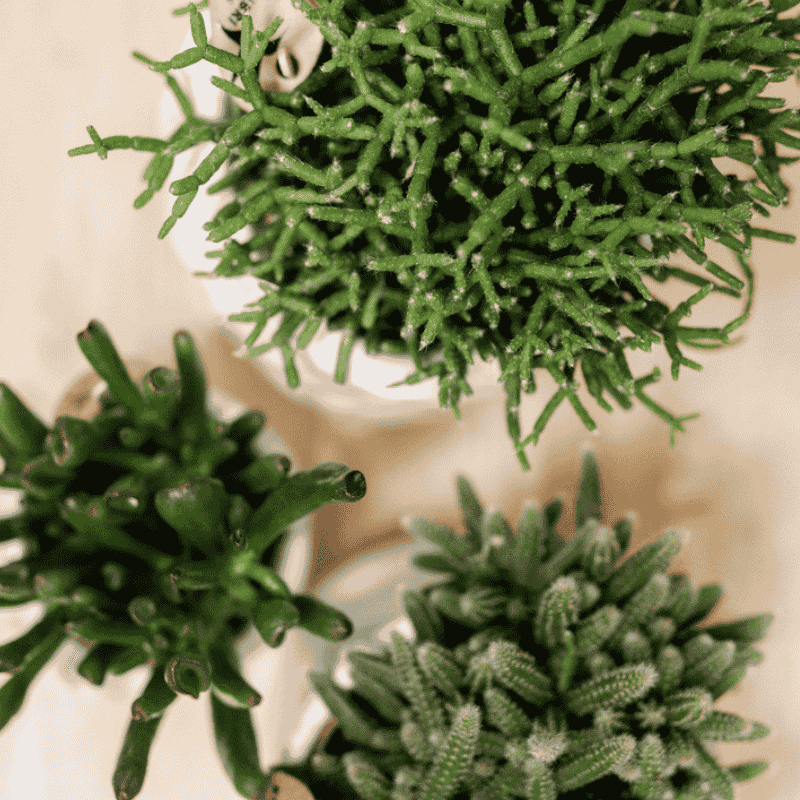
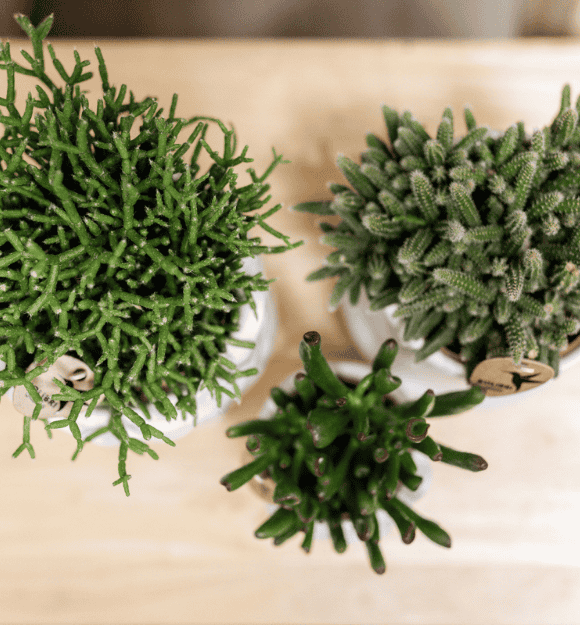
There are many different Rhipsalis species. They all have their own unique appearance. Below, we’ll tell you more about the Rhipsalis species we have in our range. In our assortment, you’ll find two different pot sizes: 6 and 9 centimeters.
Rhipsalis Baccifera
You often come across this species. The stems grow nicely in a ball shape, but sometimes you’ll see some shoots growing upwards. With this Rhipsalis species, the stems grow upwards first.
Rhipsalis Horrida
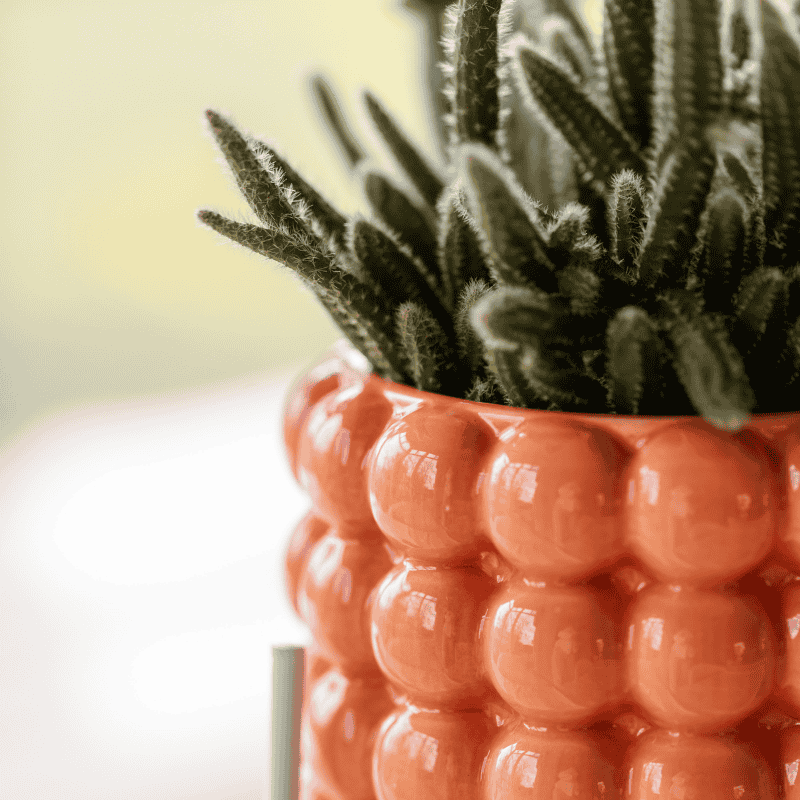
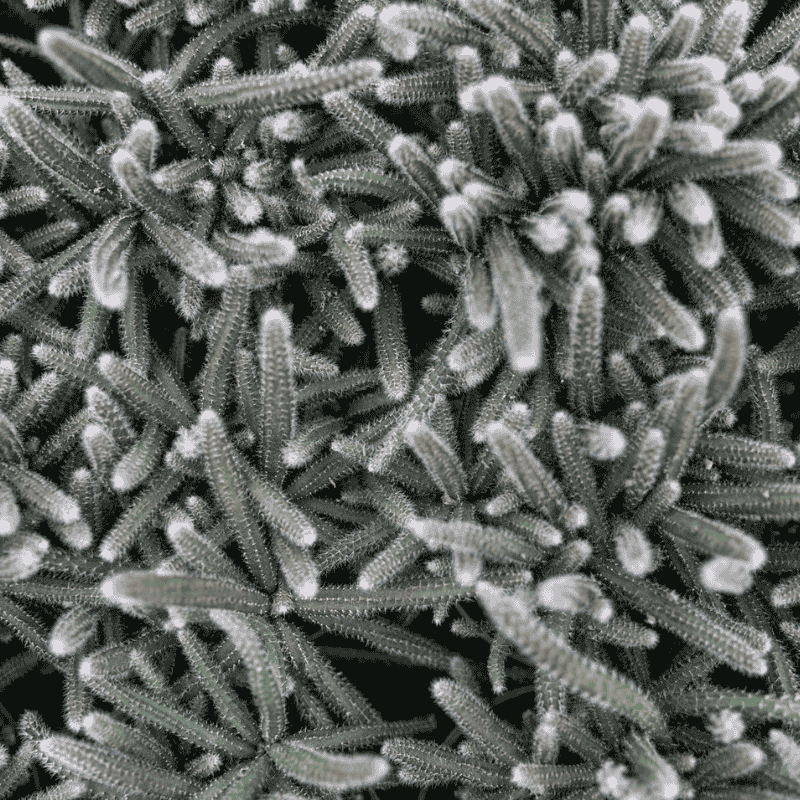
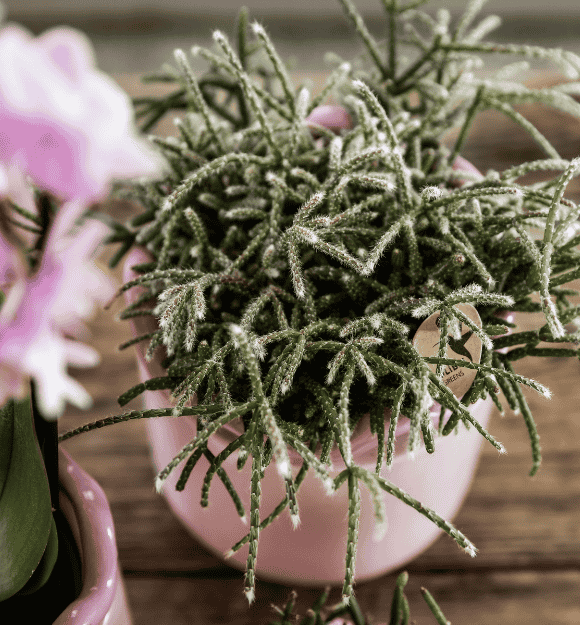
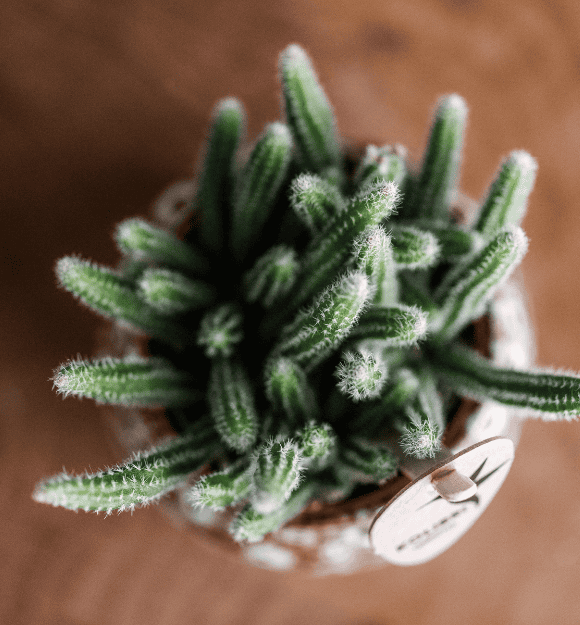
This Rhipsalis species has slightly thicker and shorter stems than many other species. They also have white hairs on their stems.
Rhipsalis Baccifera Improved
This species is very suitable as a Rhipsalis hanging plant. This is because the bright green stems grow downwards. This creates a nice effect when you hang it up.
Rhipsalis Burchelli
This species has slightly thicker stems than most Rhipsalis species. They are dark green in color.
Rhipsalis Cereuscala Gold
This species has a fresh and light green color. The stems are usually somewhat shorter and grow with many branches.
Rhipsalis Mesembryanthemoides
This Rhipsalis species is very cheerful due to the many branches on each stem. It doesn’t have many main stems, but because each stem has multiple outlets, it looks very full. This species also has a beautiful green color.
Rhipsalis Prismatica
This Rhipsalis species has a dark green color, sometimes with a slightly brownish glow. The stems are sometimes less densely populated than in other Rhipsalis species.
Rhipsalis Pilocarpa
You can quickly recognize this species by its usually long stems. They are dark green in color and have white hairs on their stems, making them feel soft to the touch.
Is the Rhipsalis toxic?
Unfortunately, it’s true that the Rhipsalis is toxic. The Rhipsalis is toxic to both humans and animals, such as cats, dogs, etc. It is therefore advisable to consult a doctor or veterinarian if the houseplant is ingested.

Needs plenty of light,
but no direct
sunlight
Submerge in water
once a week

Ideal
temperature 18
to 22 degrees
Only repot when
it grows out of
the pot



Give
special
orchid food
once every 2 months
Prune after the
flowering period

DISCOVER CARE TIPS
Video difference in roots
How often should you water an orchid?
As a standard, you should water your orchid once a week. Depending on the temperature and the season, this can also be done less or more frequently. In the warm summer months, your orchid will be thirstier and need more water.
In the cold winter months, you can easily water your orchid once every two weeks.
TIP | Before you water the orchids, always check the roots in the plastic nursery pot. These will tell you if they’re thirsty or if they still have enough water.
Are the roots light gray? Then water them, because they’re dry.
Are the roots dark green? Then they have enough water. You don’t need to water them.
Video difference in roots
How often should you water an orchid?
As a standard, you should water your orchid once a week. Depending on the temperature and the season, this can also be done less or more frequently. In the warm summer months, your orchid will be thirstier and need more water.
In the cold winter months, you can easily water your orchid once every two weeks.
TIP | Before you water the orchids, always check the roots in the plastic nursery pot. These will tell you if they’re thirsty or if they still have enough water.
Are the roots light gray? Then water them, because they’re dry.
Are the roots dark green? Then they have enough water. You don’t need to water them.
Video difference in roots
How often should you water an orchid?
As a standard, you should water your orchid once a week. Depending on the temperature and the season, this can also be done less or more frequently. In the warm summer months, your orchid will be thirstier and need more water.
In the cold winter months, you can easily water your orchid once every two weeks.
TIP | Before you water the orchids, always check the roots in the plastic nursery pot. These will tell you if they’re thirsty or if they still have enough water.
Are the roots light gray? Then water them, because they’re dry.
Are the roots dark green? Then they have enough water. You don’t need to water them.
Video difference in roots
How often should you water an orchid?
As a standard, you should water your orchid once a week. Depending on the temperature and the season, this can also be done less or more frequently. In the warm summer months, your orchid will be thirstier and need more water.
In the cold winter months, you can easily water your orchid once every two weeks.
TIP | Before you water the orchids, always check the roots in the plastic nursery pot. These will tell you if they’re thirsty or if they still have enough water.
Are the roots light gray? Then water them, because they’re dry.
Are the roots dark green? Then they have enough water. You don’t need to water them.
Video difference in roots
How often should you water an orchid?
As a standard, you should water your orchid once a week. Depending on the temperature and the season, this can also be done less or more frequently. In the warm summer months, your orchid will be thirstier and need more water.
In the cold winter months, you can easily water your orchid once every two weeks.
TIP | Before you water the orchids, always check the roots in the plastic nursery pot. These will tell you if they’re thirsty or if they still have enough water.
Are the roots light gray? Then water them, because they’re dry.
Are the roots dark green? Then they have enough water. You don’t need to water them.
Video difference in roots
How often should you water an orchid?
As a standard, you should water your orchid once a week. Depending on the temperature and the season, this can also be done less or more frequently. In the warm summer months, your orchid will be thirstier and need more water.
In the cold winter months, you can easily water your orchid once every two weeks.
TIP | Before you water the orchids, always check the roots in the plastic nursery pot. These will tell you if they’re thirsty or if they still have enough water.
Are the roots light gray? Then water them, because they’re dry.
Are the roots dark green? Then they have enough water. You don’t need to water them.
Video difference in roots
How often should you water an orchid?
As a standard, you should water your orchid once a week. Depending on the temperature and the season, this can also be done less or more frequently. In the warm summer months, your orchid will be thirstier and need more water.
In the cold winter months, you can easily water your orchid once every two weeks.
TIP | Before you water the orchids, always check the roots in the plastic nursery pot. These will tell you if they’re thirsty or if they still have enough water.
Are the roots light gray? Then water them, because they’re dry.
Are the roots dark green? Then they have enough water. You don’t need to water them.
Video difference in roots
How often should you water an orchid?
As a standard, you should water your orchid once a week. Depending on the temperature and the season, this can also be done less or more frequently. In the warm summer months, your orchid will be thirstier and need more water.
In the cold winter months, you can easily water your orchid once every two weeks.
TIP | Before you water the orchids, always check the roots in the plastic nursery pot. These will tell you if they’re thirsty or if they still have enough water.
Are the roots light gray? Then water them, because they’re dry.
Are the roots dark green? Then they have enough water. You don’t need to water them.
Video difference in roots
How often should you water an orchid?
As a standard, you should water your orchid once a week. Depending on the temperature and the season, this can also be done less or more frequently. In the warm summer months, your orchid will be thirstier and need more water.
In the cold winter months, you can easily water your orchid once every two weeks.
TIP | Before you water the orchids, always check the roots in the plastic nursery pot. These will tell you if they’re thirsty or if they still have enough water.
Are the roots light gray? Then water them, because they’re dry.
Are the roots dark green? Then they have enough water. You don’t need to water them.
How should you water an orchid?
Unlike many other houseplants, the best way to water an orchid is in
one specific way: submerging the nursery pot.
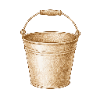
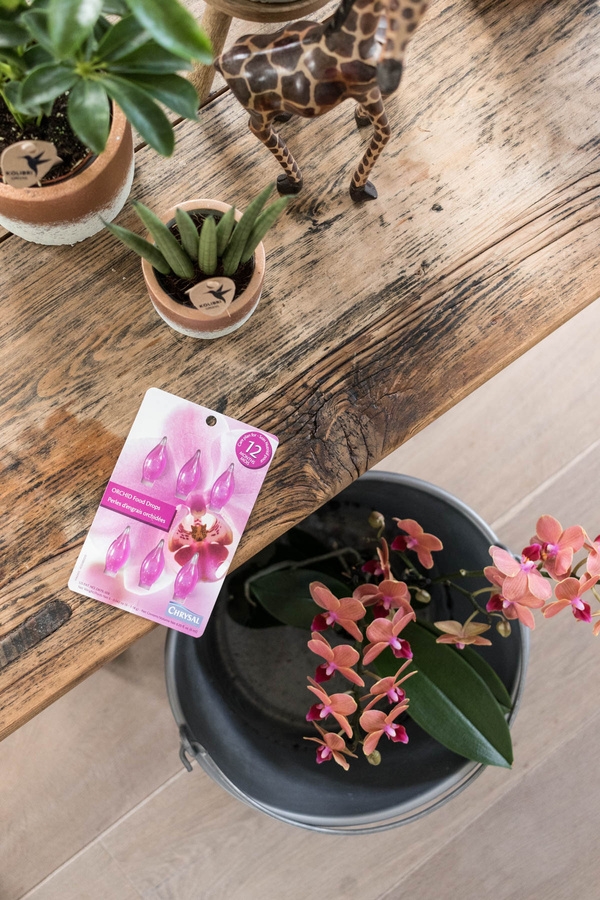
The best way to water an orchid is by submerging the plant
in water. You can do this most easily by submerging the
nursery pot in a bucket of water.
It’s better not to water using ice cubes, as this is too
cold for the plant. Orchids don’t like the cold. It’s best to give water
at room temperature.
“The best way to water an orchid is by submerging the
plant in water.
You can do this most easily by submerging the nursery pot in a
bucket of water.”

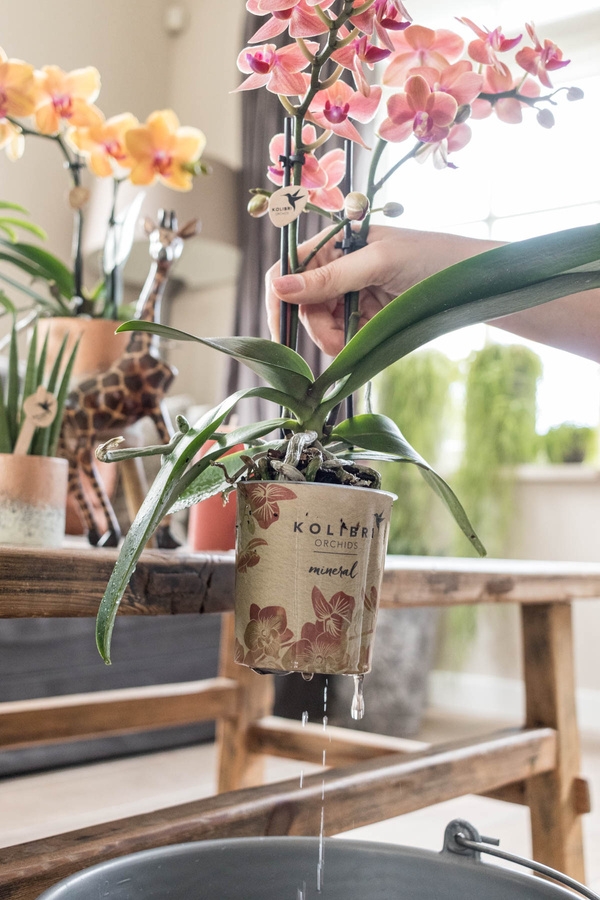

How long should you submerge an orchid?
Leave the orchid’s plastic nursery pot in water for 5 minutes. Then lift the orchid in its nursery pot out of the decorative pot and let the water drain well. Now you can put your orchid back in the decorative pot and it can enjoy its fresh water again.
TIP | Tap water is fine, but rainwater is even better! Tap water contains lime. If you have the opportunity to collect rainwater at home, feel free to do so and give rainwater to your orchid! This will allow you to enjoy your orchid for even longer.
Important: if you do water your orchid with a watering can, make sure there’s never a layer of water left in the pot! This can cause root rot, which is harmful to the plant.
Want to know even more? Read all of Sabine’s grower tips for watering orchids.