


Succulent care
How do you care for a succulent? That is a question many people ask. Fortunately, caring for a succulent is not difficult. They are easy houseplants to look after. A succulent is also called a ‘fat plant’ in Dutch because they store their water in leaves or stems. They can store a lot of water this way because they originally come from warm and dry areas, such as South Africa, America, and Mexico. Because succulents store so much water, they can survive for long periods in dry and hot temperatures. The Latin name succulent comes from the word sucus, which means juice or sap in Latin.
How do you care for a green plant? Grower Sabine Olsthoorn knows everything about green plant care and shares all her care tips with you on this page.

DISCOVER CARE TIPS
TIP | Go directly to:
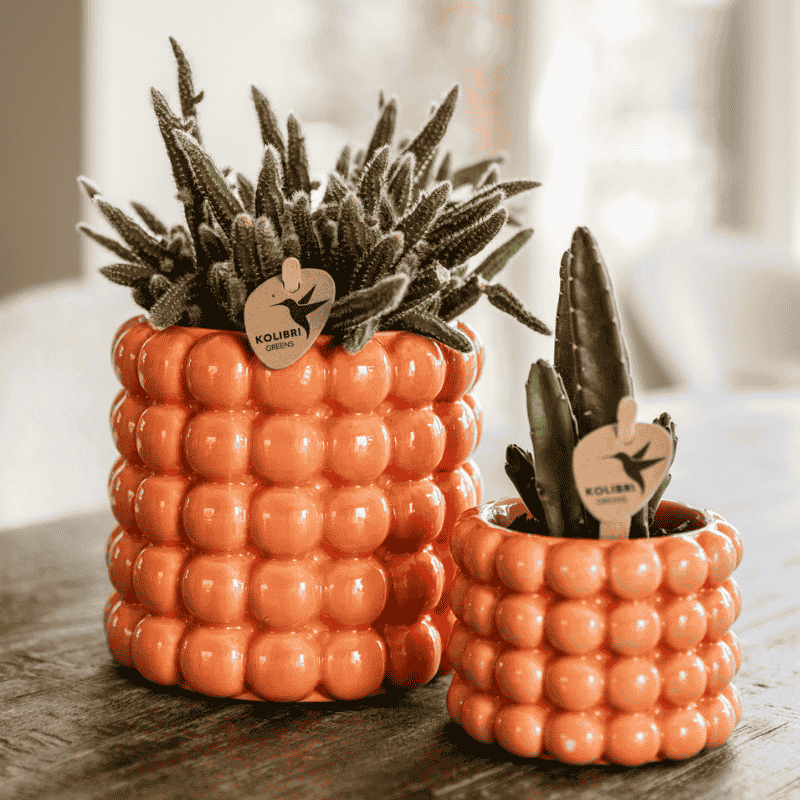
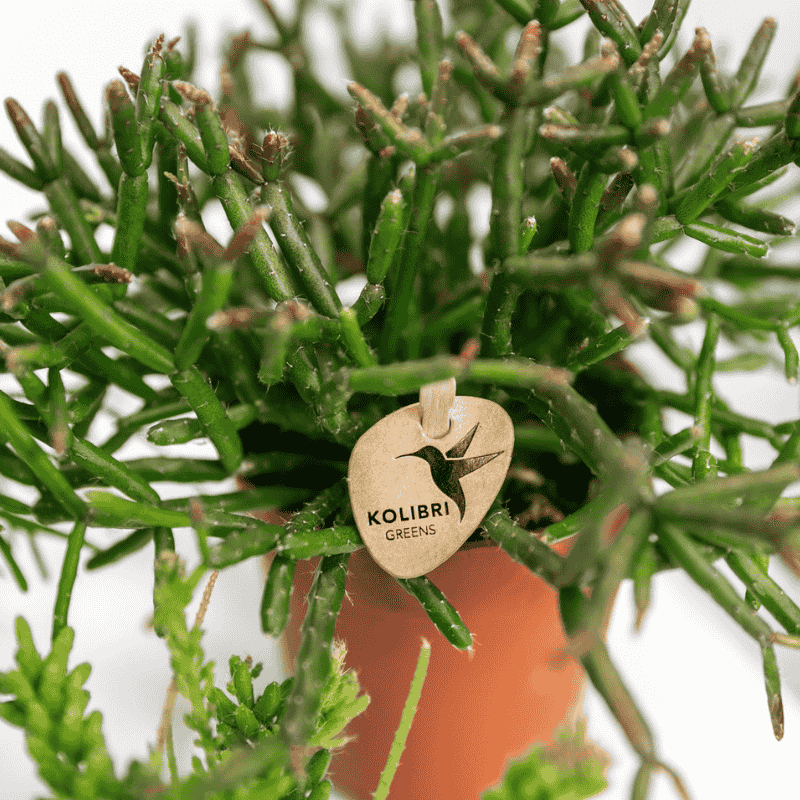
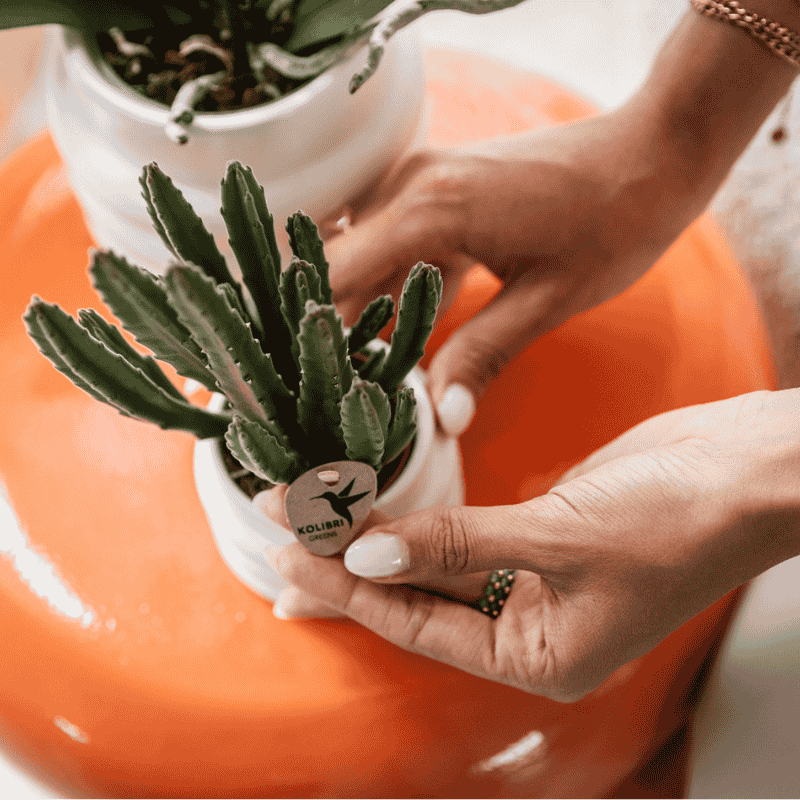
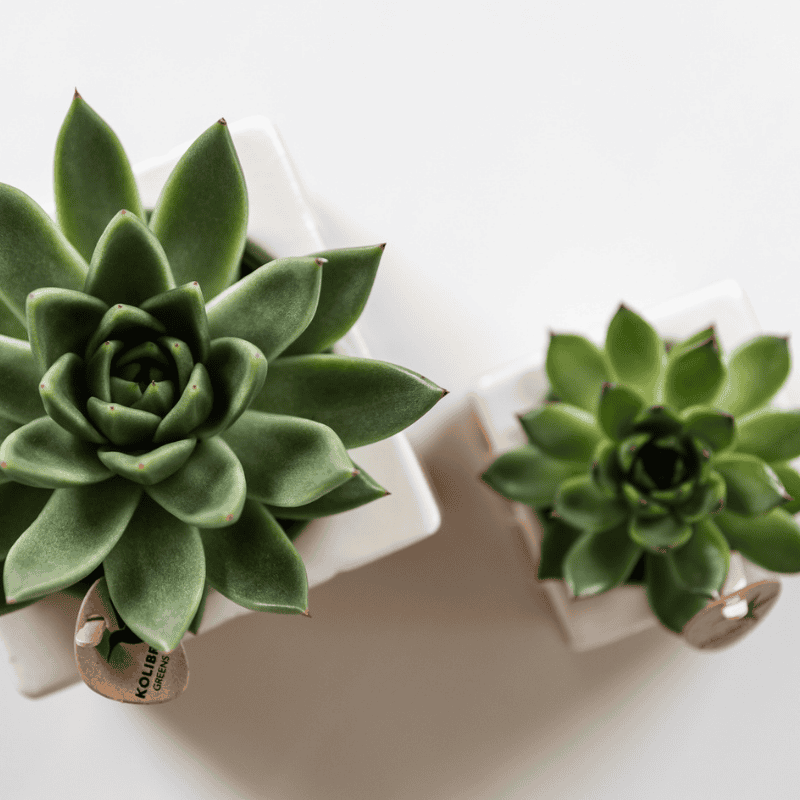
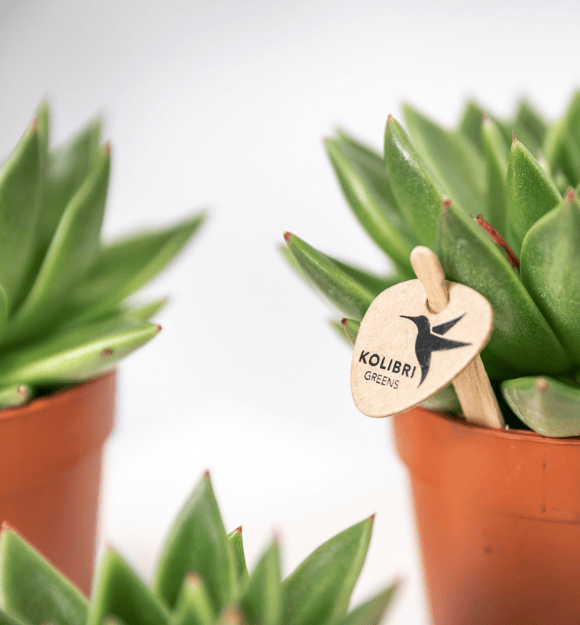
Watering succulents
Caring for a succulent or watering a succulent is not difficult. Caring for a succulent means it needs little water, as it stores its water in the fleshy leaves of the green houseplant.

Needs little water

Potting soil moist? No water needed

Better too little than too much water
TIP | Use your fingertip to feel if the soil feels dry. Does it feel wet? Then wait a little longer before tending to your succulent and only water it when the soil feels dry again.
How do you water a succulent?
When watering a succulent, it is always wise to give too little rather than too much water. It is best to water in small amounts. If the potting soil is still wet or moist, you don’t need to add any water yet. It is not good for the succulent if the soil is soaked or if a layer of water remains at the bottom. Misting a succulent is generally not necessary; because it originally comes from very dry areas, the succulent is used to this. You can occasionally rinse the plant with water to remove dust, for example.
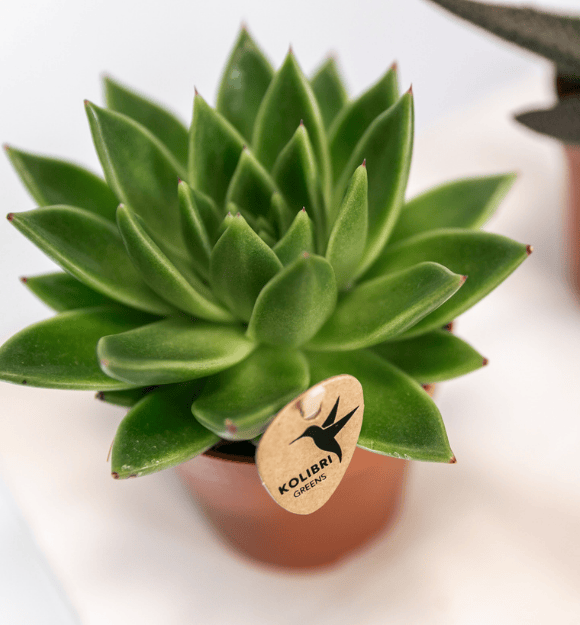

Temperature
Due to their origin, succulents are used to heat and plenty of light, so it doesn’t really matter where you place them in your home. Can a succulent be in the sun? The answer is definitely yes! Succulents enjoy both a sunny spot and a spot in the shade. Are you placing a succulent in a dark spot? Then note that it will need less water, as a succulent consumes less water there.
The ideal temperature for a succulent is between 17 and 22 degrees. Did you know that you can also put succulents outside in the summer? They can handle a bit of cold just fine, but be careful with rain. This can make them too wet because a lot of water remains in the soil. If you place succulents under a veranda or in a conservatory, they can survive perfectly well, and you can care for your succulents by watering them occasionally.
Repotting succulents
How fast does a succulent grow?
Quite fast, which is why you can repot it regularly. To start repotting a succulent, it is best to use a pot that is 20% larger than the original pot.
When to repot a succulent?
The best time to repot a succulent is in the spring. At that time, the plant is in its natural growing period. This allows the roots, which might be damaged during repotting, to recover quickly. After repotting, it is smart to wait a few days before watering your succulent.
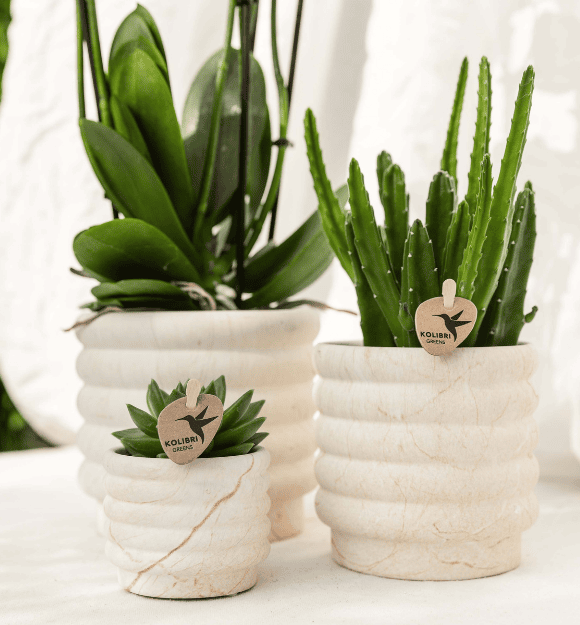
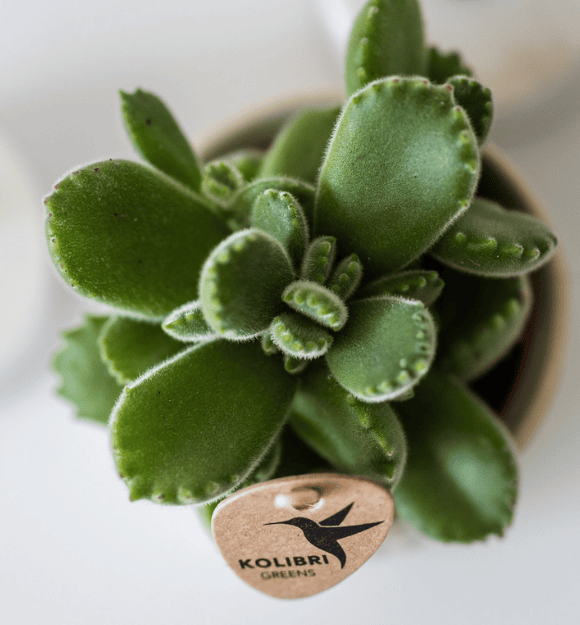
Feeding succulents
A succulent uses very few nutrients. You can imagine that in the dry conditions where it originally lives, it doesn’t get many nutrients from the soil. Succulents are not used to receiving nutrients. If you still want to give your succulent some food at home, we recommend doing this in the spring. Using too much nutrition is not good for your houseplant; always stick to the maximum amount on the instructions.
Maintaining & pruning succulents
Maintaining a succulent is not much work. There are a few different things you can do when caring for a succulent. Below we explain these steps for succulent care:
Discolored leaves
Why is my succulent getting brown tips on its leaves? A common occurrence with a succulent is that the leaves start to discolor. These can turn various colors, but usually you see a brown color appearing, which is a sign of too much water. If this happens to you, let your succulent stay dry for a longer period before watering again.
Succulent cuttings
You can take succulent cuttings in two different ways. You can propagate a succulent using a leaf cutting or a stem cutting. There are different instructions for each type of succulent:
Echeveria
- Leaf cutting: the name says it all; with a leaf cutting, you carefully remove the leaves from the plant with a twisting motion. You can lay the leaves you’ve removed together in a nice shape. After a while, roots will also start to grow from the leaves. Then you can plant it in potting soil.
- Stem cutting: with a stem cutting, you can cut off a whole section of the succulent; you can always use the top part for this. Remove the leaves at the bottom of the cutting. Let the cutting dry for about 2 days, after which you can plant it in a pot with potting soil.
Crassula
Normally, taking succulent cuttings is easiest by taking a leaf cutting from the plant. But when propagating a Crassula, it is better to take a stem cutting.
- Stem cutting: Cut off an end of the plant and let it dry for a while, after which you can pot this cutting in a new pot.
Haworthia
Taking Haworthia cuttings is not difficult. You can also propagate it in two ways: a leaf cutting and a stem cutting. A stem cutting provides the most certainty for a healthy plant.
- Leaf cutting: you can take a leaf cutting by cutting a firm leaf off the plant. Make sure you do this as close to the mother plant as possible. Then propagate the Haworthia by letting the cutting dry for a few hours and sticking it back into soil. You don’t need to give much or any water for the first few weeks.
- Stem cutting: a while after purchasing a Haworthia, offsets will grow on the side of your succulent. These usually grow at the base of your succulent. You can easily cut these off, as close to the mother plant as possible, and then let them dry. You can put it in the soil after a few hours. You don’t need to water your cutting for the first few weeks, as it first needs to develop roots.
Succulent flowering period
Does a succulent bloom?
Unfortunately, a succulent almost never grows flowers in our living rooms. With an Echeveria, you have the best chance of flowers. These flowers mainly appear in the colors white, yellow, red, or pink. The succulent usually blooms in the spring and/or summer. The Haworthia and the Crassula bloom less quickly than the Echeveria. In these two species, you will see white flowers.
Toxic
Some succulent species are toxic. Therefore, we recommend consulting a veterinarian or doctor if ingested.
Diseases
With proper care, your succulents will not be easily susceptible to diseases. If you see a disease or pest on your succulent, you can treat it biologically; read the instructions on the product packaging for this. You can find pesticides at a garden center near you.
If your succulent suffers from aphids, you can easily rinse them off with a strong stream of water.
How can a succulent die?
We hope it doesn’t happen, of course, but it can occur that a succulent is beyond saving and will die due to either too much or too little water.
In addition, there are a number of questions that are often asked by you. We are happy to answer them for you.
How do you save a succulent?
The most common reason we see is giving a succulent too much water. This causes leaves and other parts of the succulent to turn brown. To save it, we recommend stopping watering for a while until the soil has completely dried out.
What should you do if your plant has had too much water?
If you have accidentally given your succulent too much water, we recommend not watering for a while. Is your succulent in a decorative pot? Then you can also empty the water out of the decorative pot.
How do you bring a plant back to life?
If your plant is not doing well, it is wise to give it some extra nutrition. Additionally, place the plant in a bright spot and still pay close attention to watering.
How old does a succulent get?
Succulents can get very old. If you care for them well, they can last for years. There are many succulents that live for as long as 20 to 30 years.
Why does a succulent turn yellow?
If a succulent turns yellow, it is almost always a sign of dehydration. Because the plant has not received water (for a longer period), it has had to use its own water reserves. This causes some leaves to turn yellow. You can remove the leaves and water the plant again.
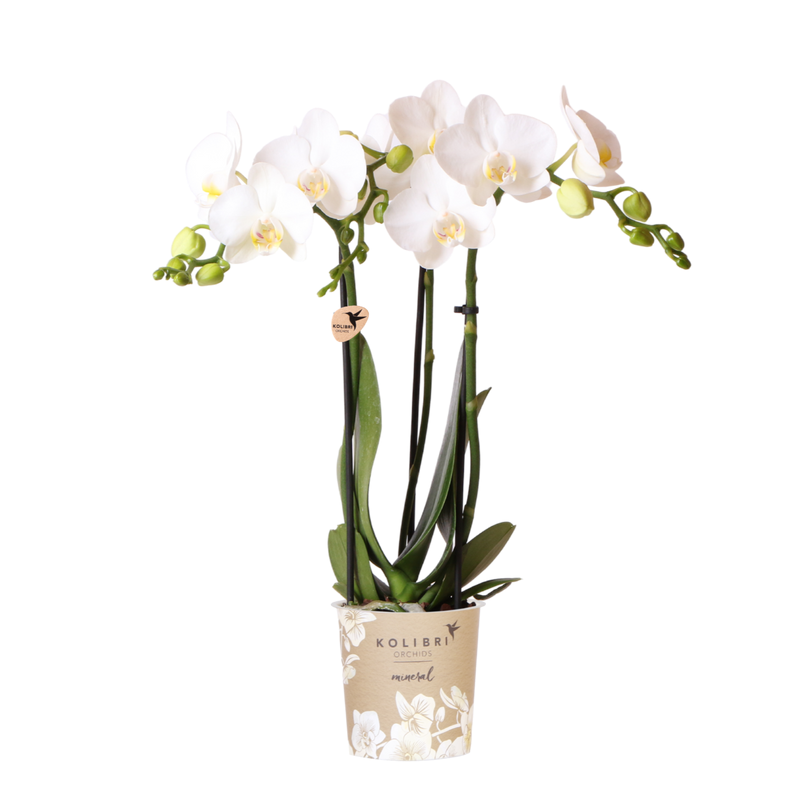

Needs plenty of light,
but no direct
sunlight
Submerge in water
once a week

Ideal
temperature 18
to 22 degrees
Only repot if
it grows out of
the pot



Give
special
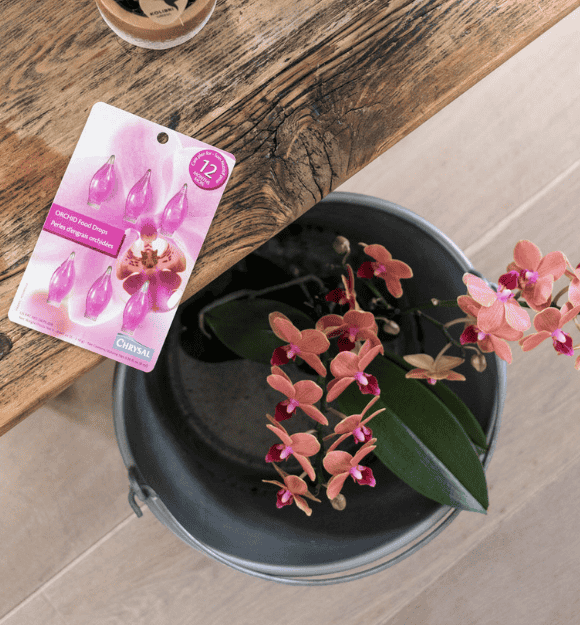
orchid food
once every 2 months
Prune after the
flowering period

DISCOVER CARE TIPS
Video difference roots
How often should you water an orchid?
As a standard, you should water your orchid once a week. Depending on the temperature and the season, this can also be done less or more often. In the warm summer months, your orchid will be thirstier and need more water.
In the cold winter months, you can easily water your orchid once every two weeks.
TIP | Before watering the orchids, always check the roots in the plastic nursery pot. These will tell you if they are thirsty or if they still have enough water.
Are the roots light gray? Then water them, because they are dry.
Are the roots dark green? Then they have enough water. You don’t need to water.
Video difference roots
How often should you water an orchid?
As a standard, you should water your orchid once a week. Depending on the temperature and the season, this can also be done less or more often. In the warm summer months, your orchid will be thirstier and need more water.
In the cold winter months, you can easily water your orchid once every two weeks.
TIP | Before watering the orchids, always check the roots in the plastic nursery pot. These will tell you if they are thirsty or if they still have enough water.
Are the roots light gray? Then water them, because they are dry.
Are the roots dark green? Then they have enough water. You don’t need to water.
Video difference roots
How often should you water an orchid?
As a standard, you should water your orchid once a week. Depending on the temperature and the season, this can also be done less or more often. In the warm summer months, your orchid will be thirstier and need more water.
In the cold winter months, you can easily water your orchid once every two weeks.
TIP | Before watering the orchids, always check the roots in the plastic nursery pot. These will tell you if they are thirsty or if they still have enough water.
Are the roots light gray? Then water them, because they are dry.
Are the roots dark green? Then they have enough water. You don’t need to water.
Video difference roots
How often should you water an orchid?
As a standard, you should water your orchid once a week. Depending on the temperature and the season, this can also be done less or more often. In the warm summer months, your orchid will be thirstier and need more water.
In the cold winter months, you can easily water your orchid once every two weeks.
TIP | Before watering the orchids, always check the roots in the plastic nursery pot. These will tell you if they are thirsty or if they still have enough water.
Are the roots light gray? Then water them, because they are dry.
Are the roots dark green? Then they have enough water. You don’t need to water.
Video difference roots
How often should you water an orchid?
As a standard, you should water your orchid once a week. Depending on the temperature and the season, this can also be done less or more often. In the warm summer months, your orchid will be thirstier and need more water.
In the cold winter months, you can easily water your orchid once every two weeks.
TIP | Before watering the orchids, always check the roots in the plastic nursery pot. These will tell you if they are thirsty or if they still have enough water.
Are the roots light gray? Then water them, because they are dry.
Are the roots dark green? Then they have enough water. You don’t need to water.
Video difference roots
How often should you water an orchid?
As a standard, you should water your orchid once a week. Depending on the temperature and the season, this can also be done less or more often. In the warm summer months, your orchid will be thirstier and need more water.
In the cold winter months, you can easily water your orchid once every two weeks.
TIP | Before watering the orchids, always check the roots in the plastic nursery pot. These will tell you if they are thirsty or if they still have enough water.
Are the roots light gray? Then water them, because they are dry.
Are the roots dark green? Then they have enough water. You don’t need to water.
Video difference roots
How often should you water an orchid?
As a standard, you should water your orchid once a week. Depending on the temperature and the season, this can also be done less or more often. In the warm summer months, your orchid will be thirstier and need more water.
In the cold winter months, you can easily water your orchid once every two weeks.
TIP | Before watering the orchids, always check the roots in the plastic nursery pot. These will tell you if they are thirsty or if they still have enough water.
Are the roots light gray? Then water them, because they are dry.
Are the roots dark green? Then they have enough water. You don’t need to water.
Video difference roots
How often should you water an orchid?
As a standard, you should water your orchid once a week. Depending on the temperature and the season, this can also be done less or more often. In the warm summer months, your orchid will be thirstier and need more water.
In the cold winter months, you can easily water your orchid once every two weeks.
TIP | Before watering the orchids, always check the roots in the plastic nursery pot. These will tell you if they are thirsty or if they still have enough water.
Are the roots light gray? Then water them, because they are dry.
Are the roots dark green? Then they have enough water. You don’t need to water.
Video difference roots
How often should you water an orchid?
As a standard, you should water your orchid once a week. Depending on the temperature and the season, this can also be done less or more often. In the warm summer months, your orchid will be thirstier and need more water.
In the cold winter months, you can easily water your orchid once every two weeks.
TIP | Before watering the orchids, always check the roots in the plastic nursery pot. These will tell you if they are thirsty or if they still have enough water.
Are the roots light gray? Then water them, because they are dry.
Are the roots dark green? Then they have enough water. You don’t need to water.
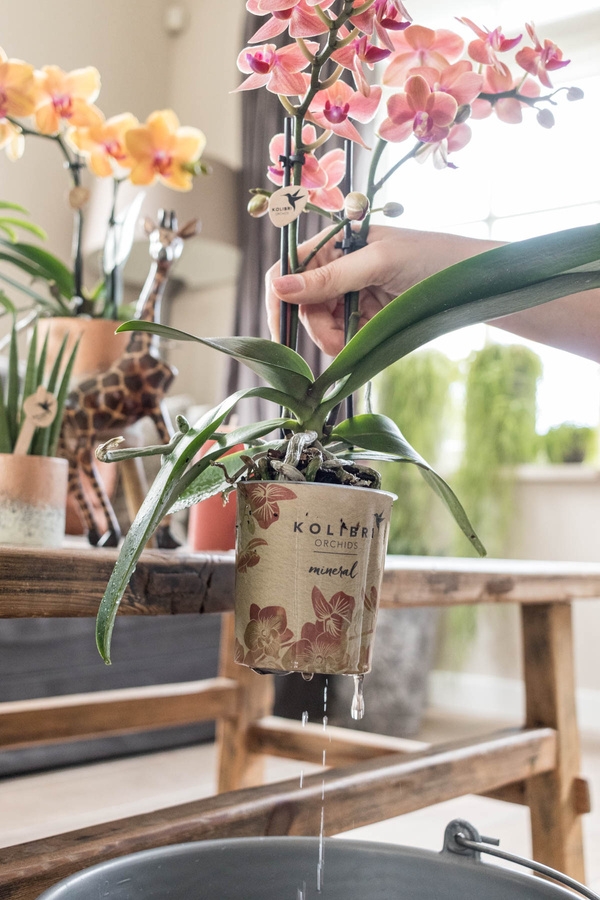
How should you water an orchid?
Unlike many other houseplants, it is best
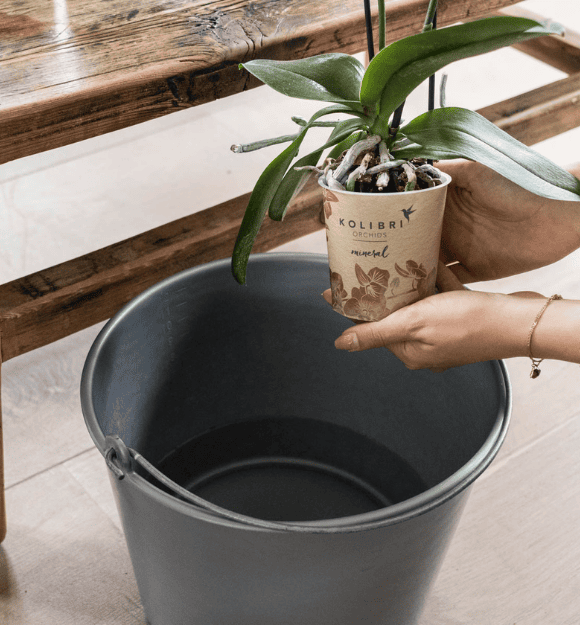
to water the orchid in one specific way: submerging the nursery pot.
The best way to water an orchid is by submerging the plant
in water. You can do this most easily by submerging the
nursery pot in a bucket of water.
It is better not to water using ice cubes, as this is too
cold for the plant. Orchids do not like cold. It is best
to give water at room temperature.
“The best way to water an orchid is by submerging the
plant in water.
You can do this most easily by submerging the nursery pot in a
bucket of water.”


How long should you submerge an orchid?
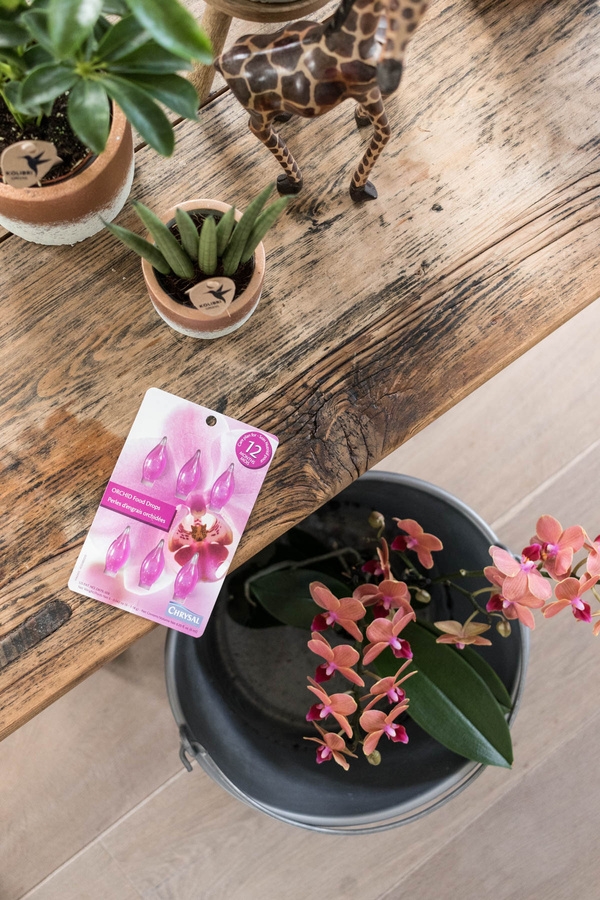
Leave the orchid’s plastic nursery pot in water for 5 minutes. Then lift the orchid in the nursery pot out of the decorative pot and let the water drain well. Now you can put your orchid back in the decorative pot and it can enjoy its fresh water.
TIP | Tap water is fine, but rainwater is even better! Tap water contains lime. If you have the opportunity to collect rainwater at home, feel free to do so and give rainwater to your orchid! This will allow you to enjoy your orchid even longer.
Important: if you do water your orchid with a watering can, make sure that a layer of water never remains in the pot! This can cause root rot, which is harmful to the plant.
Want to know even more? Read all of Sabine’s grower tips for watering orchids.