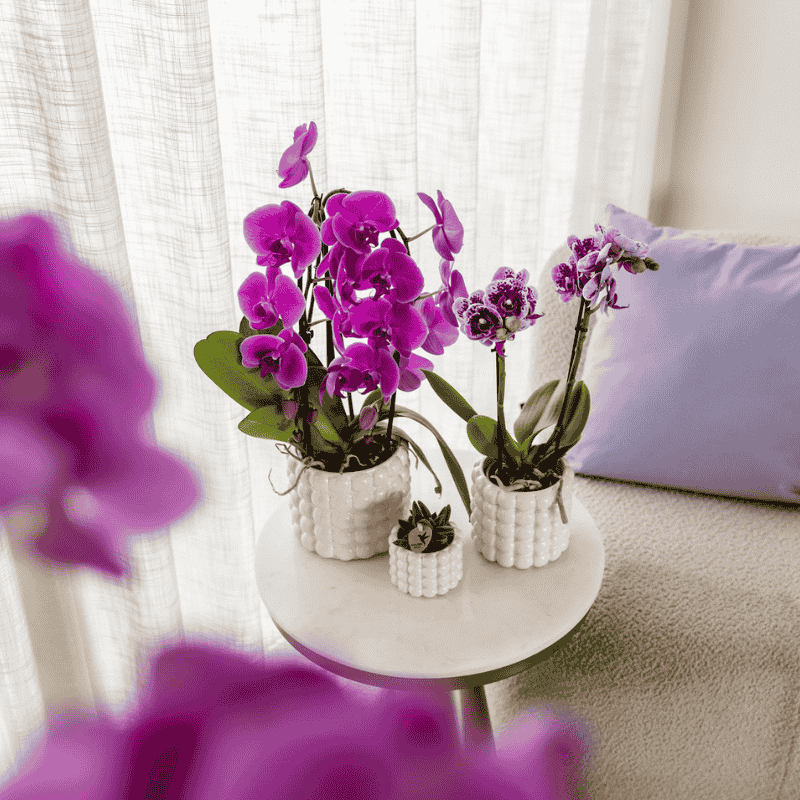
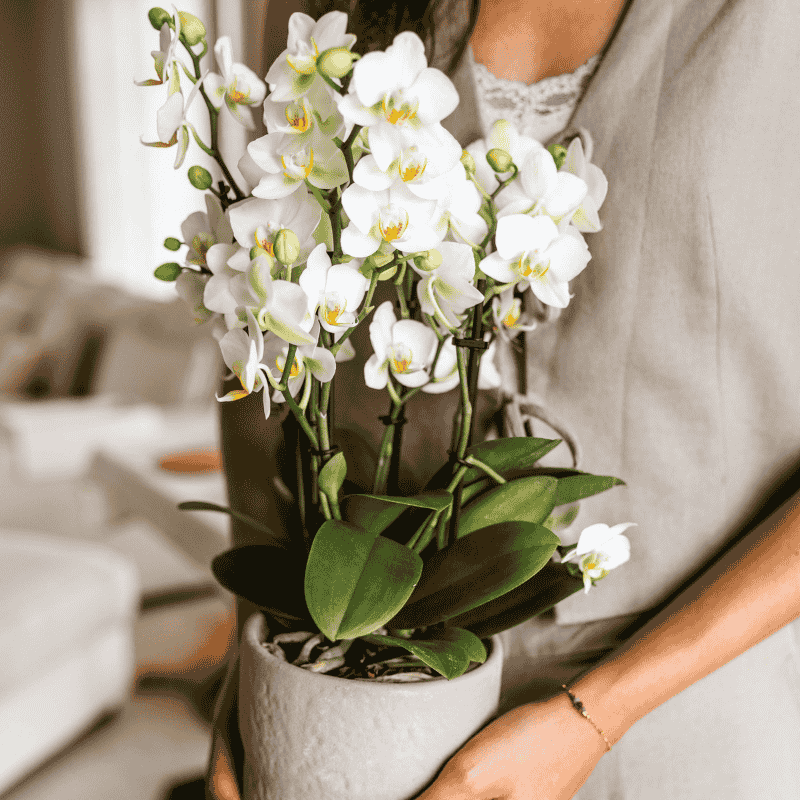
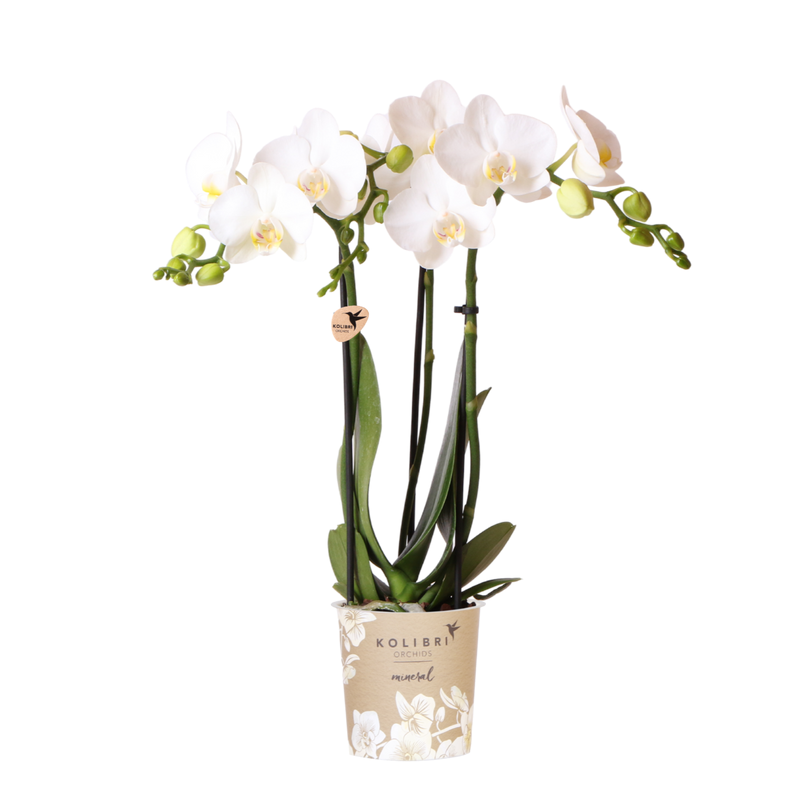
The orchid is a beautiful flowering houseplant and one of the most popular plants around. That’s not surprising, of course, because let’s be honest, those colorful flowers are amazing, aren’t they? To enjoy your beautiful orchid for as long as possible, it’s important to take good care of it.
How do you care for an orchid? Our orchid grower Sabine Olsthoorn knows everything about orchid care and shares all her care tips with you on this page.
The orchid is the best-known flowering houseplant in the Netherlands. You can find it in many different colors, which are increasingly seen in living rooms. Did you know that the orchid traveled the whole world before the plant arrived here in the Netherlands?
The orchid originally comes from Australia and Southeast Asia. There, the orchid can be found on trees, because orchids are perhaps different from the plants you’re used to.
They are actually epiphytes. This means that, unlike many other houseplants, they don’t grow in the ground, but on trees. So they don’t have ground roots, but air roots. Orchids get their nutrients from the air, light, water, and also from the trees. Beautiful and special.
Types of orchids
There really are so many orchids. The most popular is the Phalaenopsis, but the Cambria, Cattleya, Cymbidium, Dendrobium, Miltonia, and Oncidium are also well-known and popular orchids. They also have Dutch names, namely:
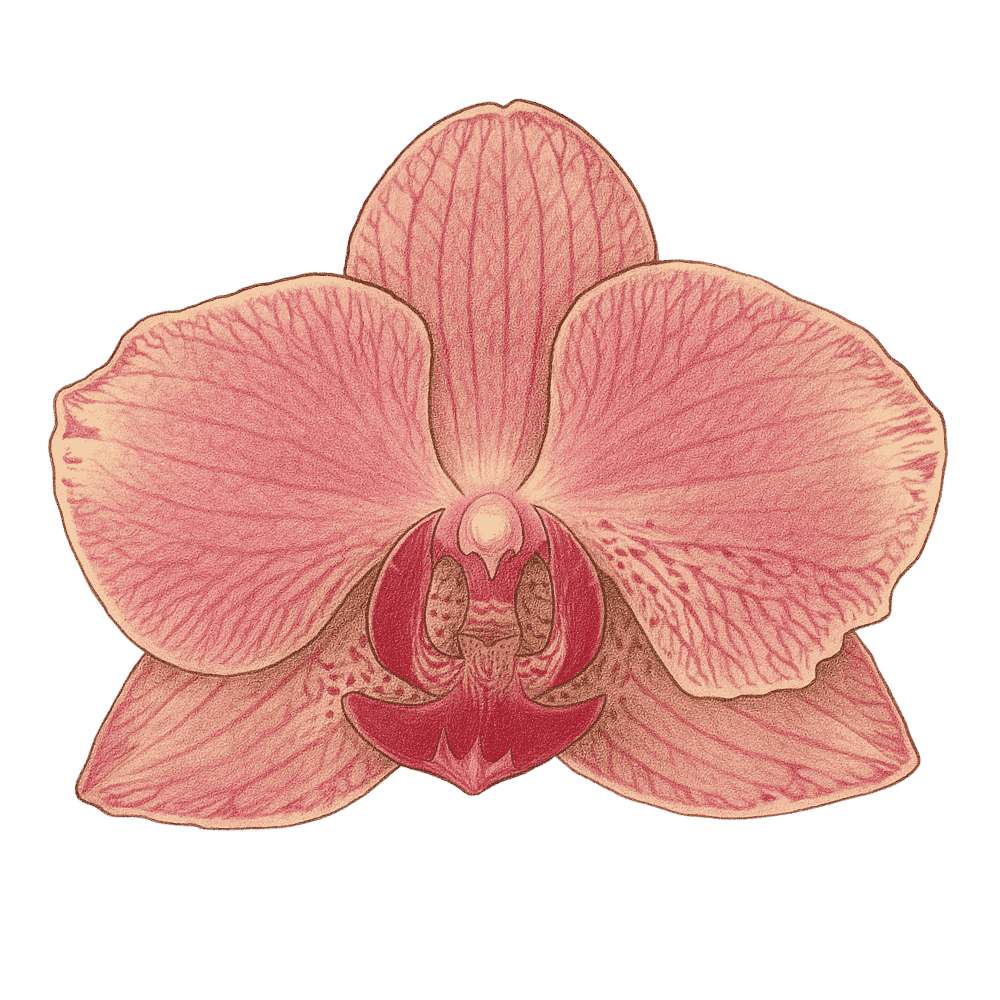
Moth orchid (Phalaenopsis)
Pansy orchid (Miltonia)
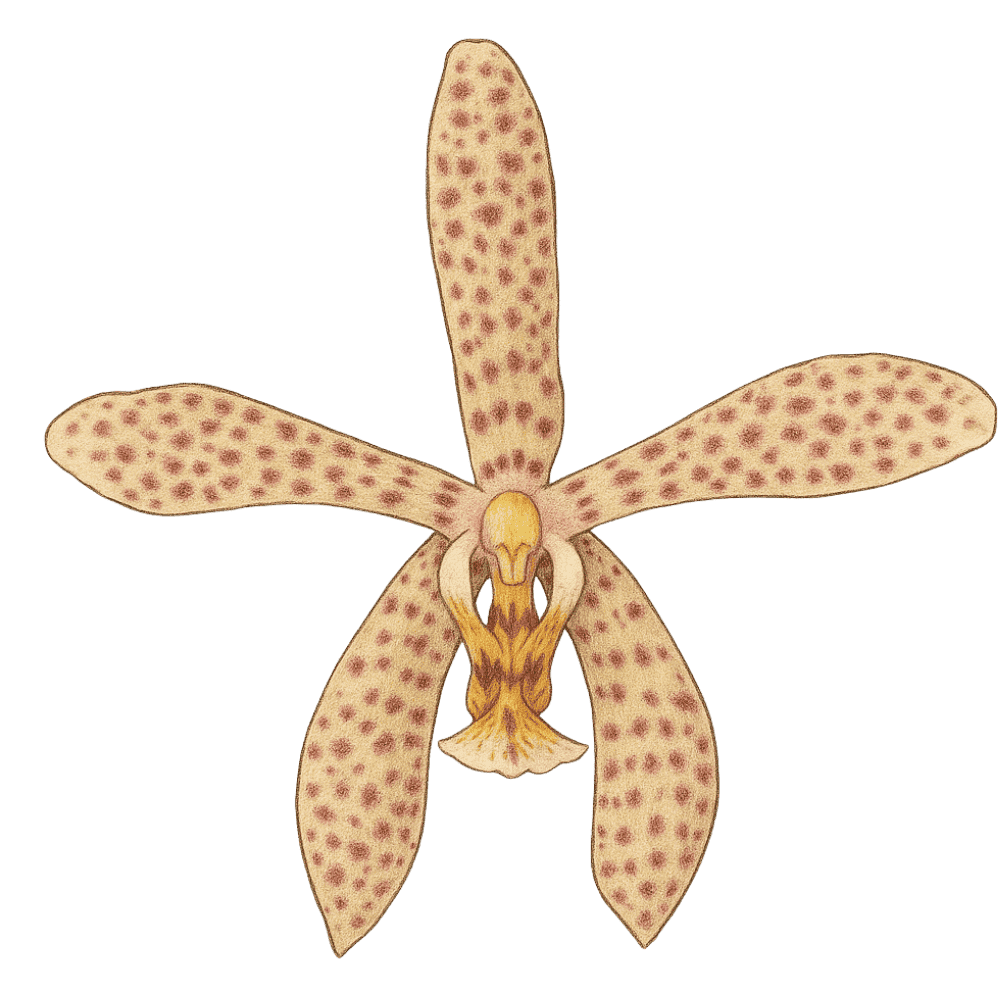
Tiger orchid (Oncidium)
Cattleya orchid (Christmas orchid)
Boat orchid (Cymbidium)
Bamboo orchid (Dendrobium)
Cambria orchid (Cambria)
The care for these species doesn’t differ much from each other. If you follow the care tips on this page, you’ll be well-equipped for moth orchid care, Dendrobium care, or other orchid care. TIP | Want to know more about the different types? Read all about it in our blog: The top 7 most beautiful orchid species
Watering orchids
You can water your orchid in several ways. How much and how often you should water an orchid also depends on various factors.
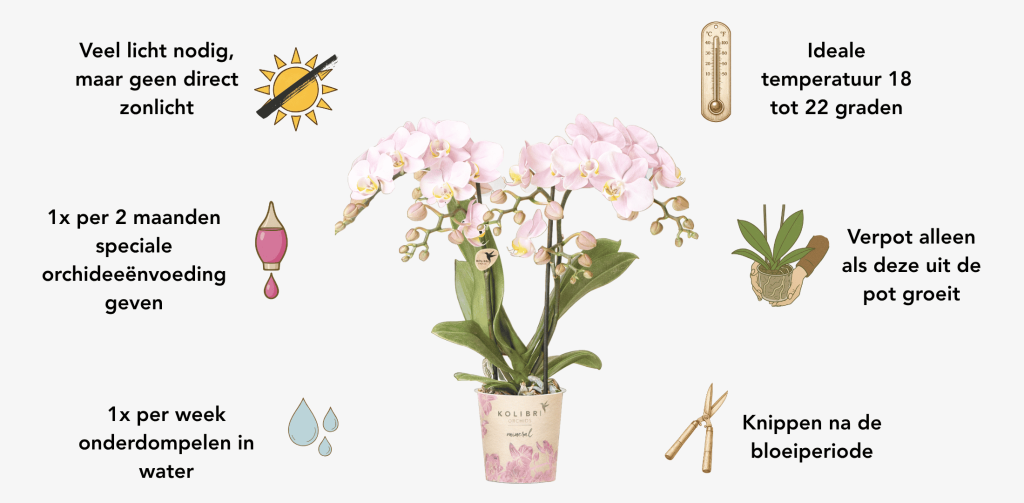
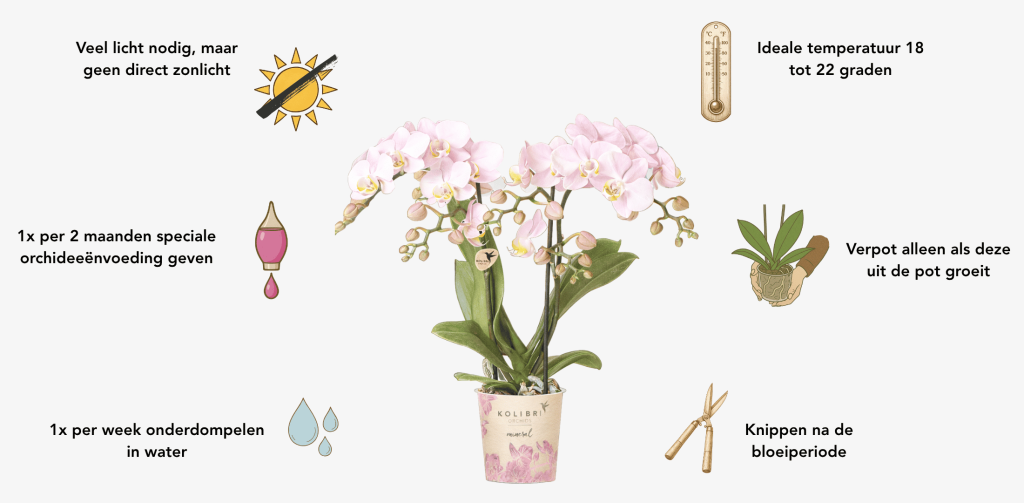
Standard watering once a week in lukewarm water
Fully submerge the nursery pot
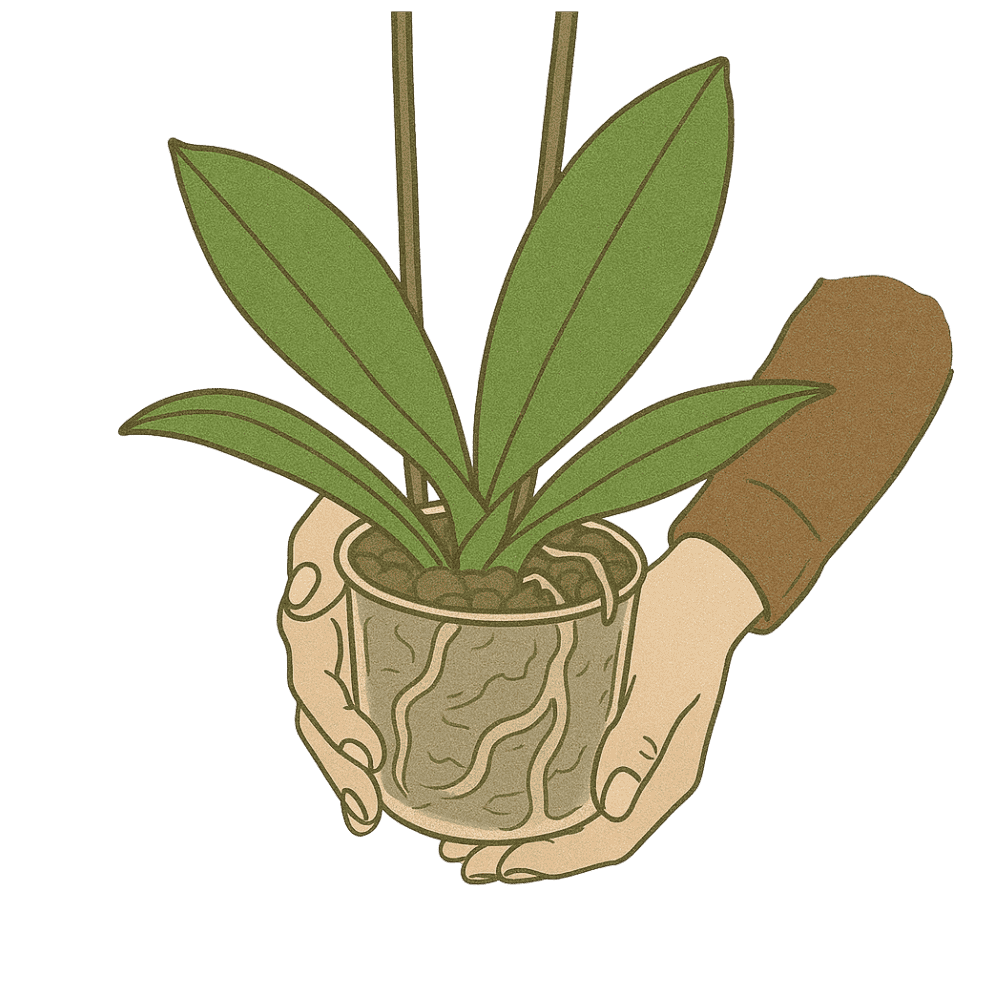
Check the roots before watering
Preferably use lime-free water (e.g., rainwater)
How often should you water an orchid?
As a standard, you should water your orchid once a week. Depending on the temperature and the season, this can also be done less or more frequently. In the warm summer months, your orchid will be thirstier and need more water. In the cold winter months, you can easily water your orchid once every two weeks.
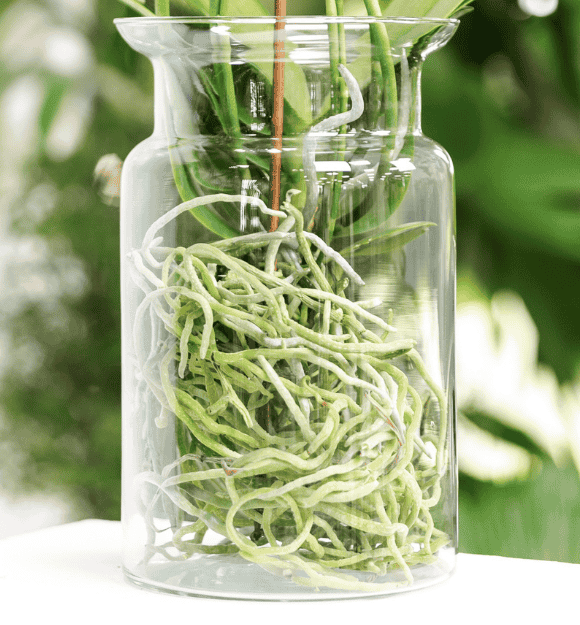
TIP | Before you start watering the orchids, always check the roots in the plastic nursery pot. These will tell you if they’re thirsty or if they still have enough water.
Are the roots light grey? Then give them water, because they are dry.
Are the roots dark green? Then they have enough water. You don’t need to water them.
How should you water an orchid?
How should you water an orchid?
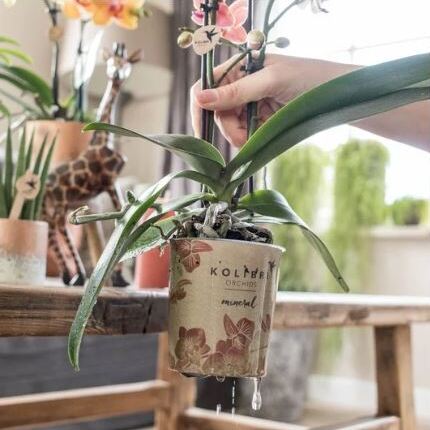
Unlike many other houseplants, it’s best to water the orchid in one way: submerging the nursery pot
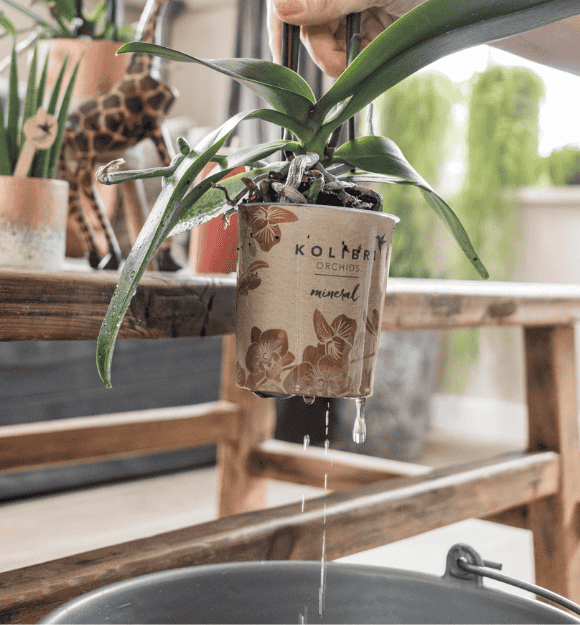
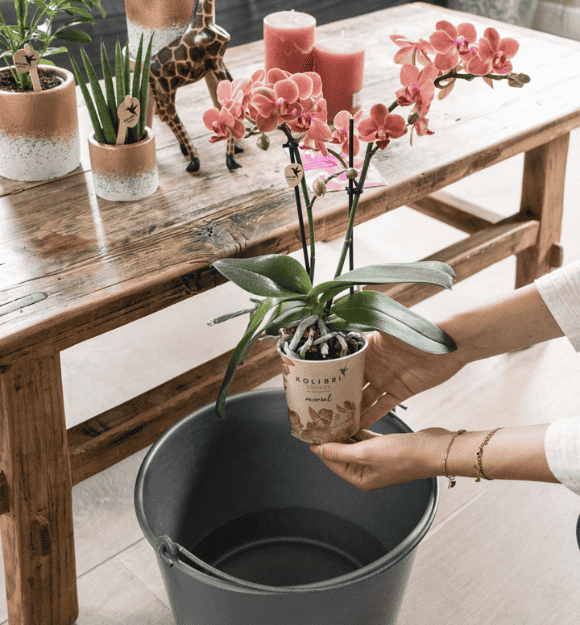
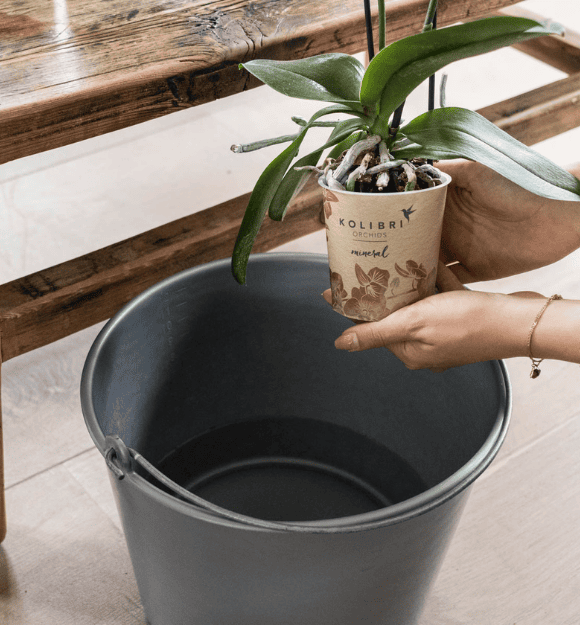
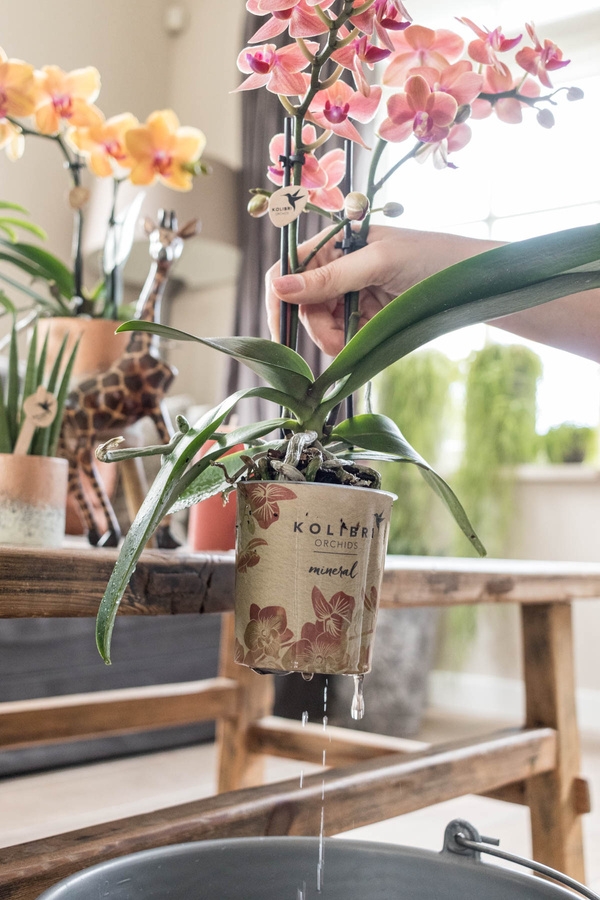
The best way to water an orchid is by submerging the plant in water. The easiest way to do this is by submerging the nursery pot in a bucket of water.
It’s better not to water with ice cubes, as this is too cold for the plant. Orchids don’t like cold. It’s best to give water at room temperature.
Leave the orchid’s plastic nursery pot in water for 5 minutes. Then lift the orchid in its nursery pot out of the decorative pot and let the water drain well. Now you can put your orchid back in the decorative pot and it can enjoy its fresh water again.
TIP | Tap water is fine, but rainwater is even better! Tap water contains lime. If you have the possibility to collect rainwater at home, feel free to do so and give rainwater to your orchid! This will allow you to enjoy your orchid even longer.
Important: if you do water your orchid with a watering can, make sure there’s never a layer of water left in the pot! This can cause root rot, which is harmful to the plant.
Orchids like a bright spot with room temperatures between 17 and 22 degrees.
TIP | Never put your orchid next to a fruit bowl. Many types of fruit release a natural substance called ethylene. This substance can speed up the orchid’s aging process.
Can an orchid be in the sun?
An orchid can be in the sun for a short while, but be careful! Too much direct sunlight is harmful to the leaves and flowers. Too much direct sunlight can burn the leaves, and they will not recover.
TIP | Direct sunlight is unfiltered. If you still want to put your orchid in front of a south-facing window or in another spot with a lot of direct sunlight, you can do so if you hang a sheer curtain in front of it.
No, do not place your orchid above or next to the heater when it is on. The warm radiator air creates drier air, which the orchid does not like. In the colder winter months, the air in the house often becomes drier. To make your orchid feel more at home, you can do two things.
Mist your orchid with a plant sprayer. This ensures that the humidity increases. Only spray on the leaves. You can also spray on the buds, but be careful not to hit the flowers, as they don’t like it as much.
Place a bowl of water on the heater. This causes the water to evaporate in the house, increasing the humidity. This option has another nice bonus: almost all plants appreciate this!
As an orchid lover, you might have had the same orchid in your home for two years or longer. Is it growing out of its pot after all this time? Then it’s high time to repot your orchid into a larger nursery pot. The roots have grown so much that it’s time for a new, larger nursery pot. You can do this by following the steps below.
Keep in mind that orchids are epiphytes. This means that in nature, they attach to living greenery and get nutrients from water and air. This means that orchids don’t like normal potting soil, but orchid bark, which consists of tree bark.
TIP | We’ve written an extensive blog about repotting orchids and how best to do it. Read the blog: Repotting orchids.
How do I repot my orchid?
Repotting your orchid might be a bit different than you’re used to with other houseplants, but with these tips from grower Sabine, you’ll be ready to go to give your orchid its new home!
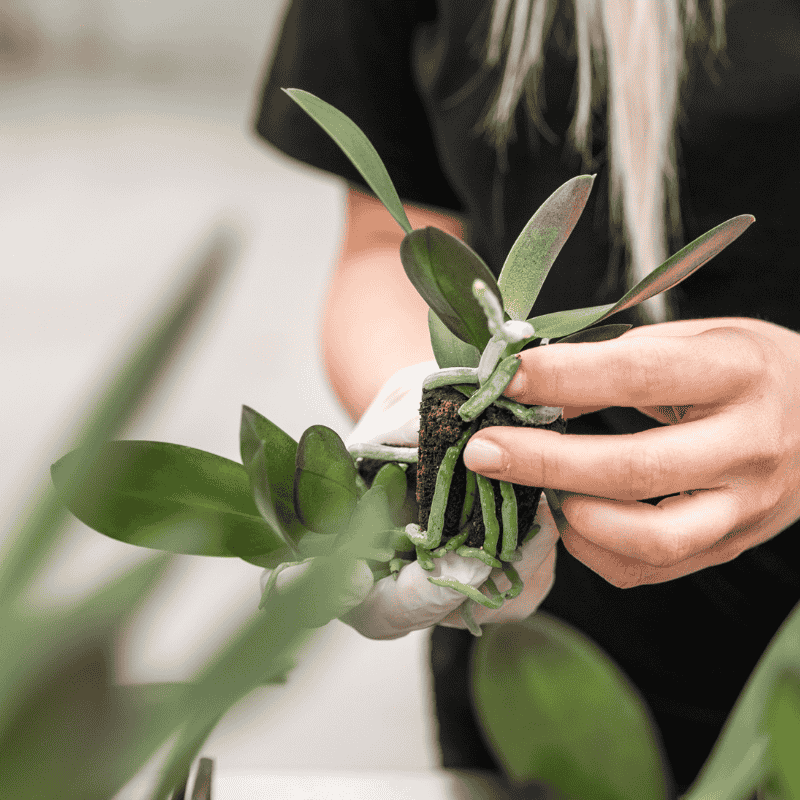
STEP 1 | Remove the orchid, roots and all, from the plastic nursery pot.
STEP 2 | If necessary, cut away the black roots with pruning shears. These are rotten and the orchid doesn’t need them.
STEP 3 | Take a bucket of lukewarm water and submerge the orchid. Then put the orchid back in the plastic nursery pot.
STEP 4 | Sprinkle the new, fresh orchid bark into the pot and press down gently.
STEP 5 | Put the orchid back in a somewhat cooler spot in the house where the temperature is around 18 degrees and avoid direct sunlight. This way, the orchid can grow new, strong roots.
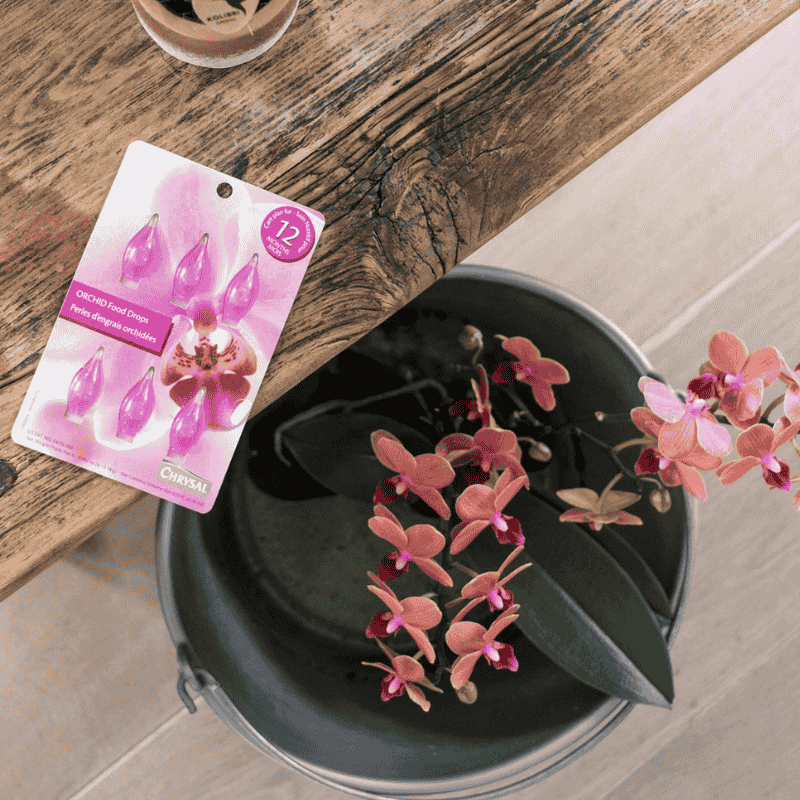
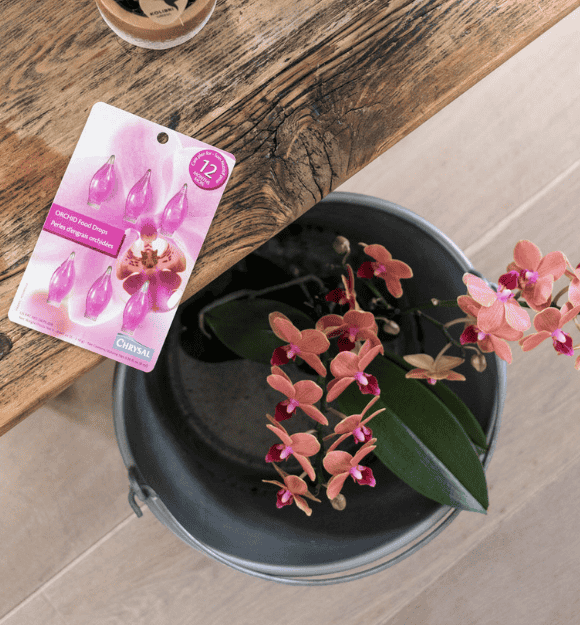
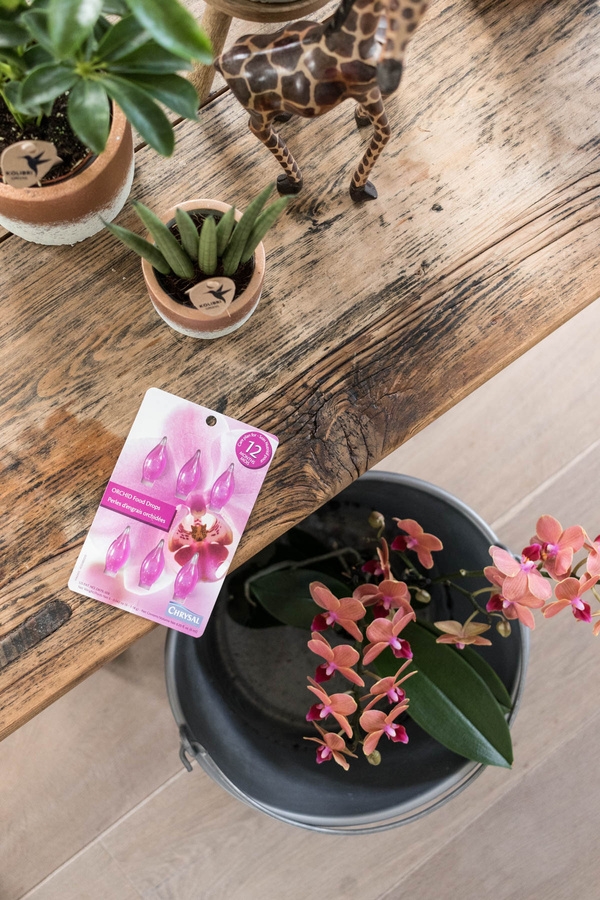
The best way to care for an orchid is to treat it once every two months with orchid food. This will keep your orchid beautiful for even longer, as it gets extra nutrients.
Special orchid food
Give food once every two months
Want to really pamper your orchids? Give them the care they deserve with our complete orchid pamper kit. This carefully curated kit contains everything you need to keep your orchids healthy, strong, and radiant.
Toxic
Are orchids poisonous?
There are so many different types of orchids, but the most well-known and popular orchids in the Netherlands are not toxic. The Phalaenopsis is not toxic to dogs and cats. If you, someone else, children, or pets still experience symptoms after touching or ingesting the leaves or flowers of an orchid, always consult your doctor. Want to know more about this? Read all about it in our blog are orchids toxic?
Flowering period
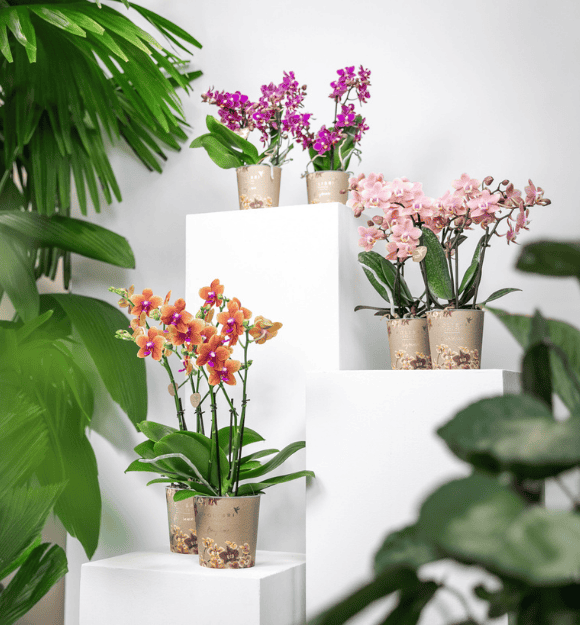
The orchid owes its popularity to its beautiful flowers. They come in so many different colors and color combinations, so there’s always an orchid that fits your interior.
Beautiful flowers
Usually blooms once a year
Flowering period of 6 – 10 weeks
Only the Phalaenopsis blooms longer and more often
How many times a year does an orchid bloom?
Most orchids have 1 flowering period per year, and this lasts about 6 to 10 weeks. The Phalaenopsis orchid is an exception to this, however. The Phalaenopsis has up to 3 flowering periods per year and can even bloom for 2 to 6 months! It’s not for nothing that the Phalaenopsis orchid is the most popular orchid in the Netherlands.
How do you get an orchid to bloom again?
Has your orchid finished blooming? Don’t panic! This certainly doesn’t mean your orchid is dead. It’s just taking a nice rest, because it takes a lot of energy to keep those beautiful flowers so lovely. You can make your orchid bloom again by pruning the plant.
Pruning orchids
Your orchid is a flowering houseplant. This means that the plant can come into bloom during certain periods of the year. And therefore not during other periods. When your orchid’s flowering period comes to an end, the flowers will fall one by one. This is a natural process. The stems will also discolor and turn yellow. Don’t throw your orchid away if you want to enjoy it again; let your orchid re-bloom instead. It is then time to prune your orchid.
Cut off at the second eye
Prune when flowers have fallen
Place orchid in a cooler spot after pruning
How should you cut/prune an orchid?
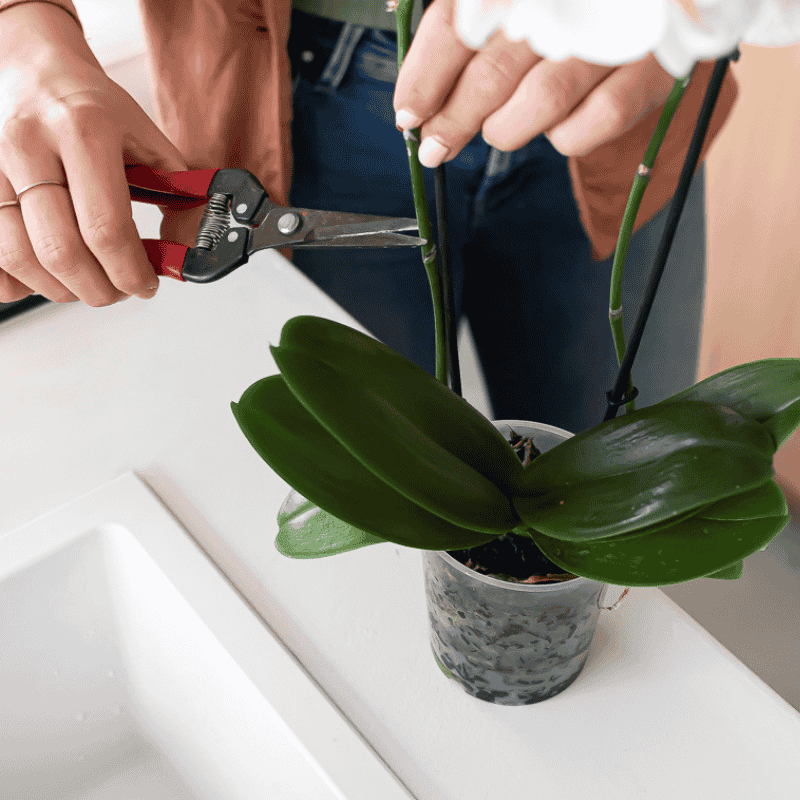
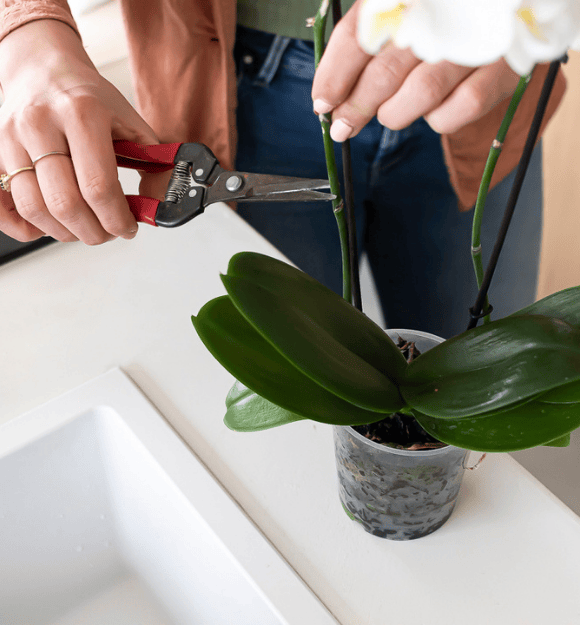
The best way to prune an orchid is by cutting the stem with sharp pruning shears. Where do you cut a finished orchid? → At the second eye!
The second eye of an orchid is the second thickening in the stem from the pot. When you prune an orchid because the flowers have fallen and the stem has changed color, you can prune the stems from the second eye. Continue to care for your orchid by continuing to water it and keeping it out of the sun, and after a few months, you’ll see your orchid starting to get new shoots with buds again.
TIP | After pruning from the second eye, put your orchid in a cooler room, for example, the bedroom. But be careful: still not too cold!
TIP | Become a pruning expert and read Rob’s best grower tips for pruning orchids.
Orchid cuttings
How do you propagate an orchid?
You can take orchid cuttings by dividing or sowing, but it’s very difficult as a hobbyist. Our grower Rob has years of experience with orchid cuttings. In our nursery in Naaldwijk, we take the orchid cuttings ourselves. If you want young, healthy orchids, it’s best to buy orchids in our shop. Still want to try taking cuttings yourself? Then you can try it as follows:
Remove a dormant eye from an orchid. This is an eye from which no branch has yet grown. Do this carefully and sterilely by removing the top skin of the eye.
Once you’ve done this, the eye looks like a little bud. You can take a cutting from this bud, and it can become the new orchid.
TIP | Want to know more? Grower Rob tells you all about taking orchid cuttings in our blog.
How do you save an orchid?
Is your orchid letting you know it doesn’t agree with something? Is it getting discoloration in the leaves, hanging limp, losing leaves or flowers, or dropping buds? It’s trying to tell you something.
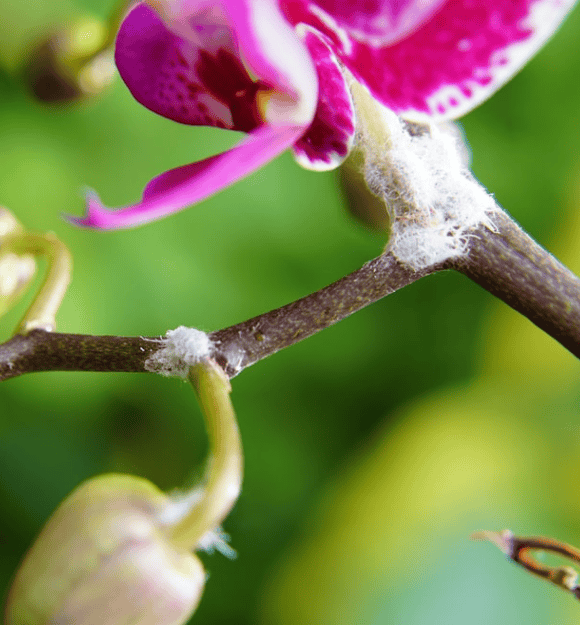
Orchids don’t get sick easily, but they can, for example, suffer from mealybugs. Mealybugs are annoying little creatures. They look like small, fuzzy insects. It’s important to take action as soon as possible if you see mealybugs on your orchid, because they suck nutrients out of the plant that your orchid itself badly needs to stay healthy. In addition, mealybugs spread very quickly, so you want to prevent other plants in the house from becoming infected too.
Yellow leaf
Why is my orchid getting yellow leaves?
We hear this question regularly, and it’s easy to answer! Yellow leaves on your orchid can mean two things:
Temperature. If it’s too cold, your orchid will let you know by getting yellow leaves. Sudden temperature differences are also a possible cause of yellow leaves.
Sunlight. Orchids like a lot of light, but not direct sunlight. Too much direct sunlight can be the cause of yellow leaves.
Check for yourself which of these two causes applies to your orchid and quickly move your orchid to another spot! For more tips, check out our blog.
Yellow buds
My orchid is getting yellow buds?
An orchid gets yellow buds as a result of too much cold, too much water, or a dark spot. The orchid doesn’t like this and will therefore drop its buds. Put the orchid in a somewhat warmer spot and water the orchid only once a week. Also, make sure you don’t put the orchid next to the fruit bowl. The substance from fruit, called ethylene, is harmful to the orchid’s buds.
Orchid dropping flowers
There can be several reasons why your orchid is dropping flowers. This can be a result of incorrect orchid care, but also of the end of the flowering period. So it’s important to check what the case is with your orchid.
Too little light.
Too little water.
Are you caring for your orchid according to the tips on this page? Then you have nothing to worry about. Then your orchid is dropping flowers because it’s the end of the flowering period. You can start pruning your orchid.
Orchid buds won't open
Why won't my orchid's buds open?
There can be several reasons why your orchid’s buds won’t open. The flowers cost the orchid a lot of energy. The plant must have that energy. Make sure you follow all the care tips on this page:
Standard watering once a week in lukewarm water
Give special plant food
Check the roots before watering
Temperature between 18 and 22 degrees
Orchid buds falling
Why are my orchid's buds falling?
If your orchid is dropping buds, it’s very likely because your orchid is too cold and/or has received too little light. Put your orchid in a warmer spot (out of direct sunlight) and submerge the plant completely in water for 5 minutes once a week.
How do you know if an orchid is dead?
If an orchid is dead, you can see it as follows:
All leaves have fallen
All leaves have turned yellow
The stems are completely dry
All air roots are brown and dry
Orchid getting limp leaves
Limp leaves on an orchid are a sign of incorrect orchid care. It’s a water problem in this case. This can be too much or too little water, but because you’re more likely to give too much water than too little, in most cases it’s due to too much water.
How to solve it? Remove severely limp leaves and don’t water for a while.
White bugs on orchid
Ew, do you have white spots or bugs on your orchid? An orchid with white bugs probably has mealybugs. Mealybugs are a pest that often occurs on houseplants. They suck the sap out of the leaves and with it the energy from your plant. Mealybugs also secrete honeydew, which can then attract ants. You’d rather prevent this. You can control mealybugs by dipping a cotton swab in rubbing alcohol and then dabbing it on the mealybugs.
Is your orchid dead and the care tips on this page can’t save it either? In our shop, you’ll find new orchids with trendy decorative pots!
As a standard, you should water your orchid once a week. Depending on the temperature and the season, this can also be done less or more frequently. In the warm summer months, your orchid will be thirstier and need more water.
In the cold winter months, you can easily water your orchid once every two weeks.
TIP | Before you water the orchids, always check the roots in the plastic nursery pot. These will tell you if they’re thirsty or if they still have enough water.
Are the roots light gray? Then water them, because they’re dry. Are the roots dark green? Then they have enough water. You don’t need to water them.
Video difference in roots
How often should you water an orchid?
As a standard, you should water your orchid once a week. Depending on the temperature and the season, this can also be done less or more frequently. In the warm summer months, your orchid will be thirstier and need more water.
In the cold winter months, you can easily water your orchid once every two weeks.
TIP | Before you water the orchids, always check the roots in the plastic nursery pot. These will tell you if they’re thirsty or if they still have enough water.
Are the roots light gray? Then water them, because they’re dry. Are the roots dark green? Then they have enough water. You don’t need to water them.
Video difference in roots
How often should you water an orchid?
As a standard, you should water your orchid once a week. Depending on the temperature and the season, this can also be done less or more frequently. In the warm summer months, your orchid will be thirstier and need more water.
In the cold winter months, you can easily water your orchid once every two weeks.
TIP | Before you water the orchids, always check the roots in the plastic nursery pot. These will tell you if they’re thirsty or if they still have enough water.
Are the roots light gray? Then water them, because they’re dry. Are the roots dark green? Then they have enough water. You don’t need to water them.
Video difference in roots
How often should you water an orchid?
As a standard, you should water your orchid once a week. Depending on the temperature and the season, this can also be done less or more frequently. In the warm summer months, your orchid will be thirstier and need more water.
In the cold winter months, you can easily water your orchid once every two weeks.
TIP | Before you water the orchids, always check the roots in the plastic nursery pot. These will tell you if they’re thirsty or if they still have enough water.
Are the roots light gray? Then water them, because they’re dry. Are the roots dark green? Then they have enough water. You don’t need to water them.
Video difference in roots
How often should you water an orchid?
As a standard, you should water your orchid once a week. Depending on the temperature and the season, this can also be done less or more frequently. In the warm summer months, your orchid will be thirstier and need more water.
In the cold winter months, you can easily water your orchid once every two weeks.
TIP | Before you water the orchids, always check the roots in the plastic nursery pot. These will tell you if they’re thirsty or if they still have enough water.
Are the roots light gray? Then water them, because they’re dry. Are the roots dark green? Then they have enough water. You don’t need to water them.
Video difference in roots
How often should you water an orchid?
As a standard, you should water your orchid once a week. Depending on the temperature and the season, this can also be done less or more frequently. In the warm summer months, your orchid will be thirstier and need more water.
In the cold winter months, you can easily water your orchid once every two weeks.
TIP | Before you water the orchids, always check the roots in the plastic nursery pot. These will tell you if they’re thirsty or if they still have enough water.
Are the roots light gray? Then water them, because they’re dry. Are the roots dark green? Then they have enough water. You don’t need to water them.
Video difference in roots
How often should you water an orchid?
As a standard, you should water your orchid once a week. Depending on the temperature and the season, this can also be done less or more frequently. In the warm summer months, your orchid will be thirstier and need more water.
In the cold winter months, you can easily water your orchid once every two weeks.
TIP | Before you water the orchids, always check the roots in the plastic nursery pot. These will tell you if they’re thirsty or if they still have enough water.
Are the roots light gray? Then water them, because they’re dry. Are the roots dark green? Then they have enough water. You don’t need to water them.
Video difference in roots
How often should you water an orchid?
As a standard, you should water your orchid once a week. Depending on the temperature and the season, this can also be done less or more frequently. In the warm summer months, your orchid will be thirstier and need more water.
In the cold winter months, you can easily water your orchid once every two weeks.
TIP | Before you water the orchids, always check the roots in the plastic nursery pot. These will tell you if they’re thirsty or if they still have enough water.
Are the roots light gray? Then water them, because they’re dry. Are the roots dark green? Then they have enough water. You don’t need to water them.
Video difference in roots
How often should you water an orchid?
As a standard, you should water your orchid once a week. Depending on the temperature and the season, this can also be done less or more frequently. In the warm summer months, your orchid will be thirstier and need more water.
In the cold winter months, you can easily water your orchid once every two weeks.
TIP | Before you water the orchids, always check the roots in the plastic nursery pot. These will tell you if they’re thirsty or if they still have enough water.
Are the roots light gray? Then water them, because they’re dry. Are the roots dark green? Then they have enough water. You don’t need to water them.
How should you water an orchid?
Unlike many other houseplants, the best way to water an orchid is in one specific way: submerging the nursery pot. The best way to water an orchid is by submerging the plant in water. You can do this most easily by submerging the nursery pot in a bucket of water.
It’s better not to water using ice cubes, as this is too cold for the plant. Orchids don’t like the cold. It’s best to give water at room temperature.
“The best way to water an orchid is by submerging the plant in water. You can do this most easily by submerging the nursery pot in a bucket of water.”
How long should you soak an orchid?
Leave the orchid’s plastic nursery pot in water for 5 minutes. Then lift the orchid in its nursery pot out of the decorative pot and let the water drain well. Now you can put your orchid back in the decorative pot and it can enjoy its fresh water again.
TIP | Tap water is fine, but rainwater is even better! Tap water contains lime. If you have the opportunity to collect rainwater at home, feel free to do so and give rainwater to your orchid! This will allow you to enjoy your orchid for even longer.
Important: if you do water your orchid with a watering can, make sure there’s never a layer of water left in the pot! This can cause root rot, which is harmful to the plant.
Want to know even more? Read all of Sabine’s grower tips for watering orchids.